








- Introduction: A First-Timer’s Guide to What to Expect at a Traditional Asian Grocery Market
- What Is a Traditional Asian Grocery Market?
- What to Expect at a Traditional Asian Grocery Market: The Sights & Sounds
- Freshness First: The Produce, Meat & Seafood Sections
- Navigating the Aisles: Staples, Sauces & Street Snacks
- Cultural Etiquette: How to Shop Respectfully
- More Than Shopping: Markets as Social & Cultural Hubs
- Regional Differences: From Tokyo to Bangkok to Delhi
- Tips for First-Time Visitors
- Conclusion: Why These Markets Are Worth the Visit
- ❓ Frequently Asked Questions (FAQs)
- What should I expect at a traditional Asian grocery market for the first time?
- Is it okay to take photos in a traditional Asian grocery market?
- How is a traditional Asian grocery market different from a Western supermarket?
- Can I find halal or vegetarian options at a traditional Asian grocery market?
- Are prices negotiable in a traditional Asian grocery market?
Introduction: A First-Timer’s Guide to What to Expect at a Traditional Asian Grocery Market
Have you ever walked into a place and instantly felt like you’d stepped into another world? The air thick with the scent of lemongrass and chili oil. Vendors calling out in melodic tones. Baskets overflowing with unfamiliar fruits, jars of fermented sauces, and live fish flapping in shallow tanks.
This isn’t a scene from a travel documentary — it’s a typical morning at a traditional Asian grocery market. And if you’ve ever wondered what to expect at a traditional Asian grocery market, you’re not just stepping into a store — you’re entering a living, breathing cultural experience.
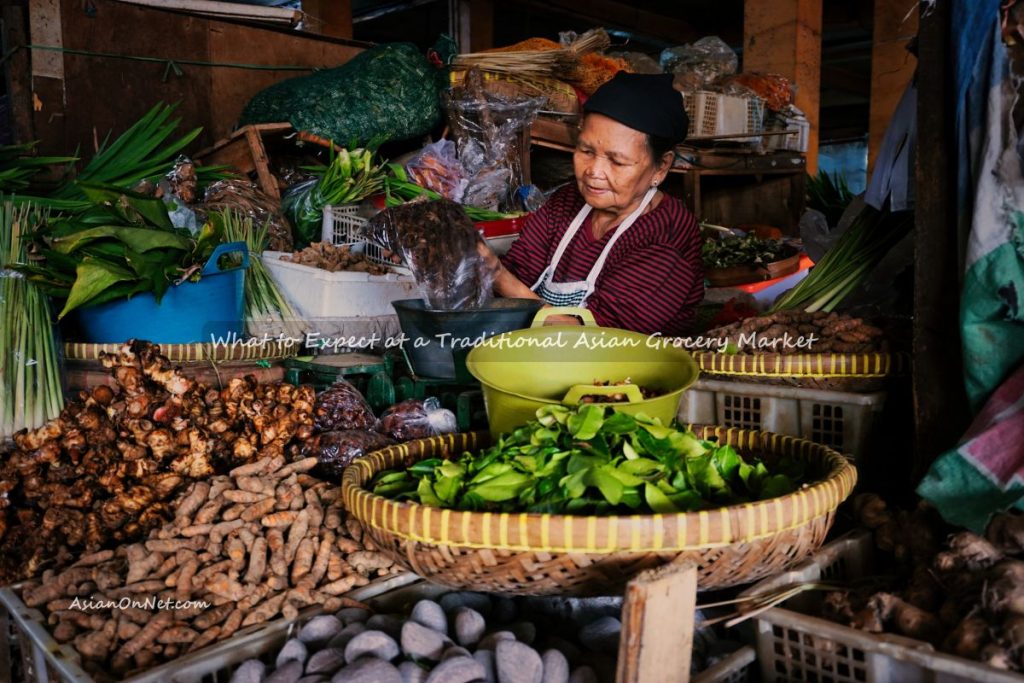
These markets are far more than places to buy food. They are the heartbeat of daily life across Asia — where grandmothers haggle over bok choy, chefs source the freshest ingredients, and tourists discover flavors they never knew existed.
In this guide, we’ll take you on a journey through the vibrant aisles, sensory overload, and hidden etiquette of these bustling hubs. Whether you’re planning a trip to Bangkok, exploring a local Chinatown, or just curious about global food culture, understanding what to expect at a traditional Asian grocery market will transform your visit from overwhelming to unforgettable.
What Is a Traditional Asian Grocery Market?
Before diving into the chaos and charm, let’s define what we mean by a “traditional” Asian grocery market.
Unlike the sterile, fluorescent-lit supermarkets common in the West, traditional Asian grocery markets are usually open-air or semi-covered spaces made up of dozens — sometimes hundreds — of small stalls run by individual vendors. These aren’t chain stores; they’re often family-run businesses that have been operating for generations.
You’ll find them in cities like Tokyo’s Tsukiji Outer Market, Bangkok’s Or Tor Kor, Hanoi’s Dong Xuan, or Mumbai’s Crawford Market. But you don’t need to fly halfway across the world — many major cities in the U.S., Canada, and Europe have thriving Asian markets in neighborhoods like Flushing (NYC), Richmond (Vancouver), or Leicester (UK).
So, what sets them apart?
- Freshness is king: Most produce, meat, and seafood are delivered daily — often slaughtered or harvested that morning.
- Hyper-local sourcing: Vendors prioritize regional ingredients, from mountain herbs in Nepal to river fish in the Mekong Delta.
- Cash-based and personal: Transactions are face-to-face, often involving gestures, smiles, or broken English — and rarely a credit card machine.
- Cultural specificity: Each market reflects the cuisine and customs of its community — whether it’s Korean, Vietnamese, Indian, or Filipino.
To truly grasp what to expect at a traditional Asian grocery market, it helps to see it not as a shopping destination, but as a cultural institution. It’s where food, family, and tradition intersect in the most delicious way possible.
And once you understand that, the noise, the smells, the crowds — they all start to make sense.
👉 “Craving an authentic Thai experience? Don’t miss our guide on Discover Bangkok’S Vibrant Traditional Thai Markets.”
What to Expect at a Traditional Asian Grocery Market: The Sights & Sounds
Let’s walk through the entrance.
The first thing that hits you? Sound. A symphony of sizzling woks, chopping knives, rapid-fire bargaining, and the occasional rooster crowing from a nearby poultry stall. Music might be playing — perhaps a retro Mandarin pop song or a Tamil film hit — blending with the hum of conversation in half a dozen languages.
Then comes the sight. Rows of stalls stretch as far as the eye can see. Bright green bunches of Thai basil. Pyramids of rambutan with their spiky red shells. Mountains of turmeric, ginger, and galangal piled like jewels. Fish tanks bubble with live eels, crabs, and sea bass, their gills flaring with each breath.
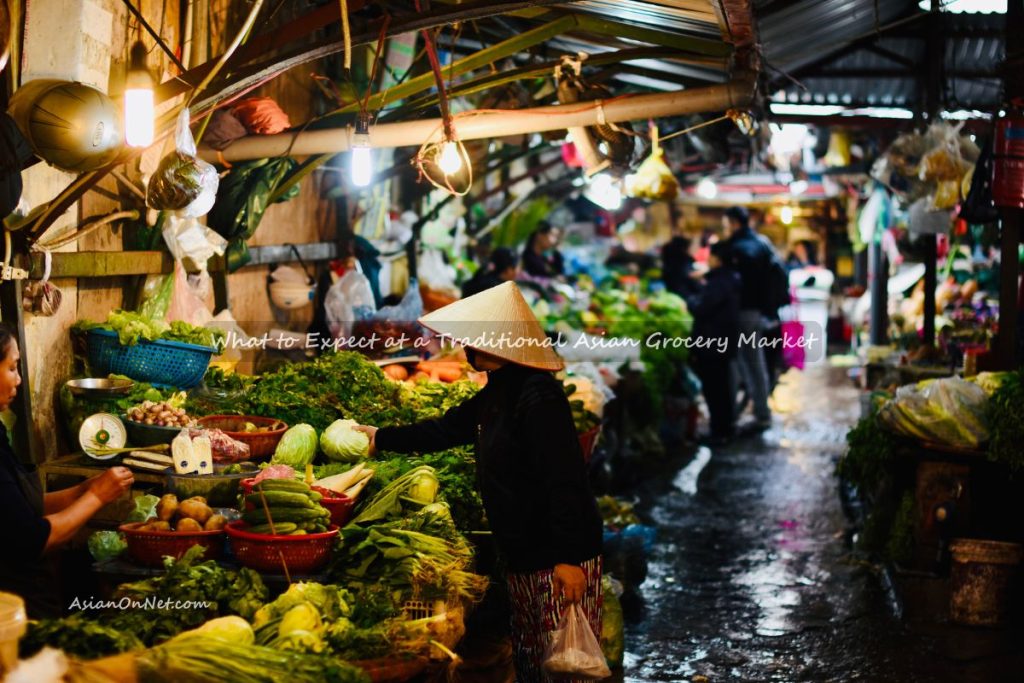
And the smells? Oh, the smells. Fermented shrimp paste (belacan), pungent durian, smoky dried squid, and the sweet tang of ripe mangoes. Some scents are inviting; others might make you pause — but that’s part of the adventure.
This is exactly what to expect at a traditional Asian grocery market — energy, color, and constant motion. There’s no central aisle, no standardized signage, and definitely no “organic” labels. Instead, trust is built through relationships. You buy from the same tofu vendor every week because she remembers how firm you like it.
👉 “Want to live greener without losing style? Don’t miss our guide on Eco-Friendly Bamboo Home Products from Asia: Past & Future.”
It’s chaotic, yes — but beautifully so. Like a well-rehearsed dance where everyone knows their role: the auntie rearranging her lychees, the delivery boy weaving through with a tower of watermelons, the tourist snapping photos while trying not to block the path.
One thing’s for sure: boredom doesn’t exist here.
Freshness First: The Produce, Meat & Seafood Sections
If there’s one rule that governs traditional Asian markets, it’s this: freshness is non-negotiable.
Walk through the produce section, and you’ll see vegetables still damp with morning dew, roots caked in soil, and herbs so vibrant they look like they were just pulled from the earth. In many markets, farmers bring their harvest directly from nearby fields — sometimes just hours before.
Common finds include:
- Bitter melon, used in Chinese and Filipino dishes for its detoxifying properties
- Long beans, stir-fried with shrimp paste in Malaysia and Indonesia
- Tatsoi and gai lan, leafy greens essential in Cantonese cooking
- Snake beans, okra, and fuzzy melons — all with names that sound like riddles to first-timers
Now, head to the meat section — and prepare for a reality check. Unlike Western supermarkets where cuts are neatly wrapped in plastic, here you’ll often see whole pigs hanging, chickens with heads still on, and butchers hacking through bones with cleavers. It’s not for the faint of heart, but it’s honest. You know exactly what you’re getting.
And then there’s the seafood — often the star of the show.
In markets across Southeast Asia and East Asia, live seafood is the norm. Crabs scuttle in wire baskets. Fish swim in shallow tanks. Squid are still twitching on ice. In places like Singapore’s Tekka Market or Taiwan’s Dongmen Market, vendors will clean and scale your fish on the spot — sometimes while it’s still alive.
One of the most striking things you’ll discover when learning what to expect at a traditional Asian grocery market is the emphasis on freshness. There’s no “best before” date — just the vendor’s word and your instincts. If the fish has clear eyes and firm flesh, it’s good. If it smells sour, walk away.
Knowing this helps refine what to expect at a traditional Asian grocery market — especially if you’re used to pre-packaged Western supermarkets. Here, food isn’t hidden behind glass. It’s raw, real, and deeply connected to the land and sea.
Navigating the Aisles: Staples, Sauces & Street Snacks
Once you’ve braved the fresh sections, it’s time to explore the dry goods and prepared foods — where flavor reigns supreme.
The staples are simple but essential:
- Rice, of course — in dozens of varieties: jasmine, sticky, black, red, and even lotus-leaf-wrapped
- Noodles, from thin rice vermicelli to thick udon and hand-pulled lamian
- Flours and starches, like tapioca, mung bean, and glutinous rice flour for dumplings and desserts
Then come the sauces and condiments — the soul of Asian cooking.
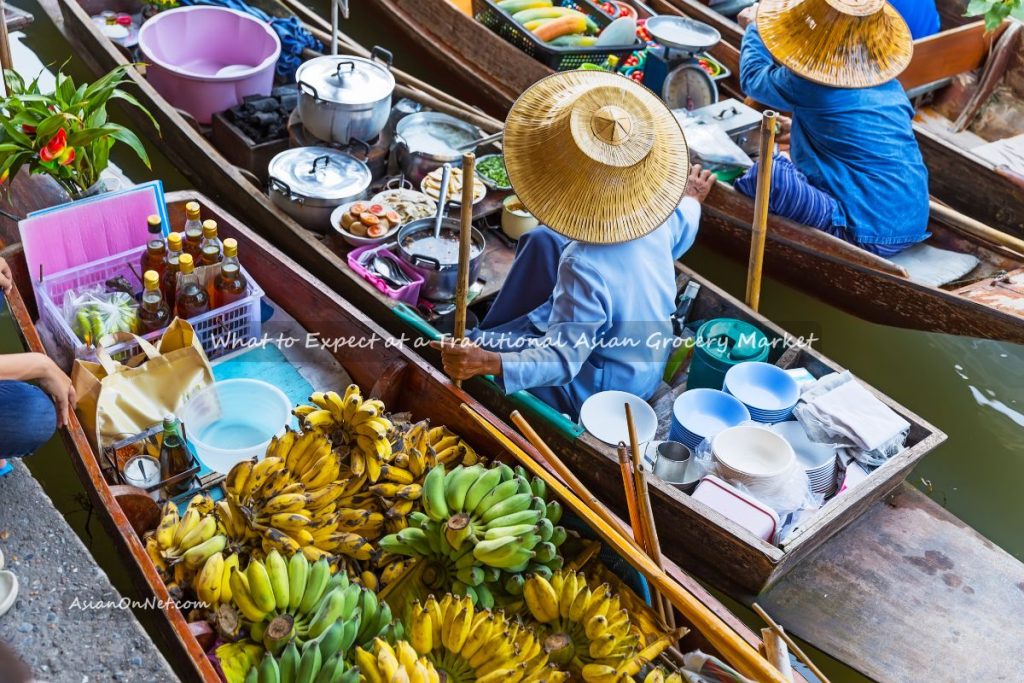
Shelves are lined with bottles and jars of:
- Soy sauce (light, dark, tamari, shoyu)
- Fish sauce (nuoc mam, nam pla) — pungent but essential
- Oyster sauce, hoisin, black bean paste, and chili oils
- Fermented products like Korean doenjang, Chinese doubanjiang, and Japanese miso
These aren’t just ingredients — they’re flavor builders, each with a story. A single jar of fermented bean paste might have been aged for months in a family kitchen in Sichuan.
And don’t forget the snacks.
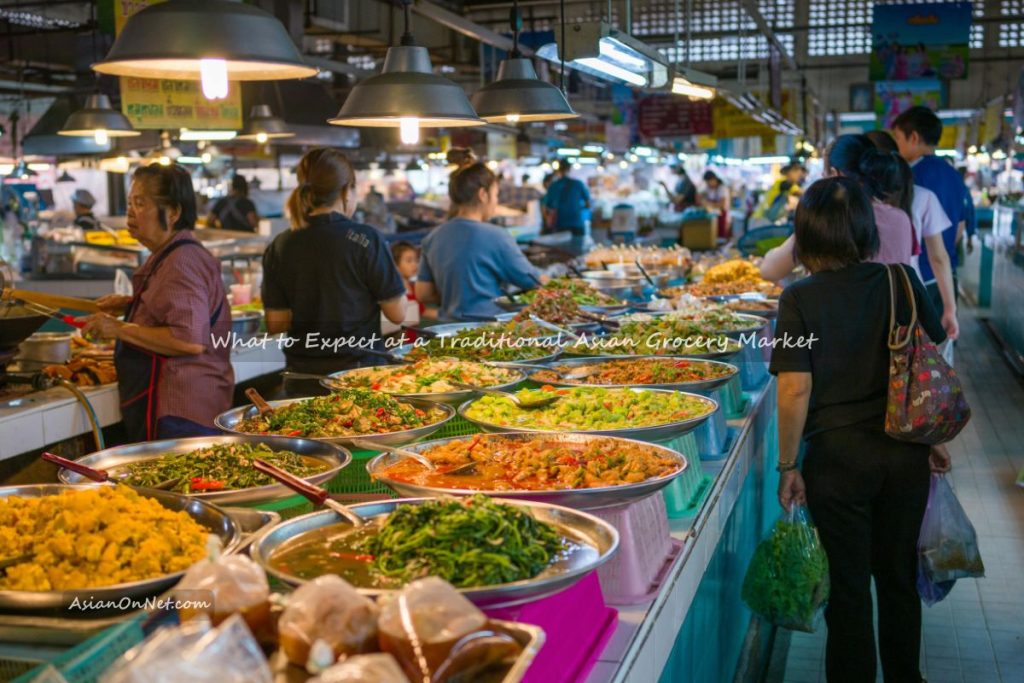
Many markets double as street food zones, where you can grab:
- Steaming dumplings or siomai
- Fresh spring rolls or pajeon (Korean pancakes)
- Sweet mochi, bánh bao, or jalebis
- Bubble tea, sugarcane juice, or iced coconut water
You might even see people sitting on plastic stools, slurping noodles mid-morning — because in these markets, eating isn’t reserved for mealtimes. It’s part of the experience.
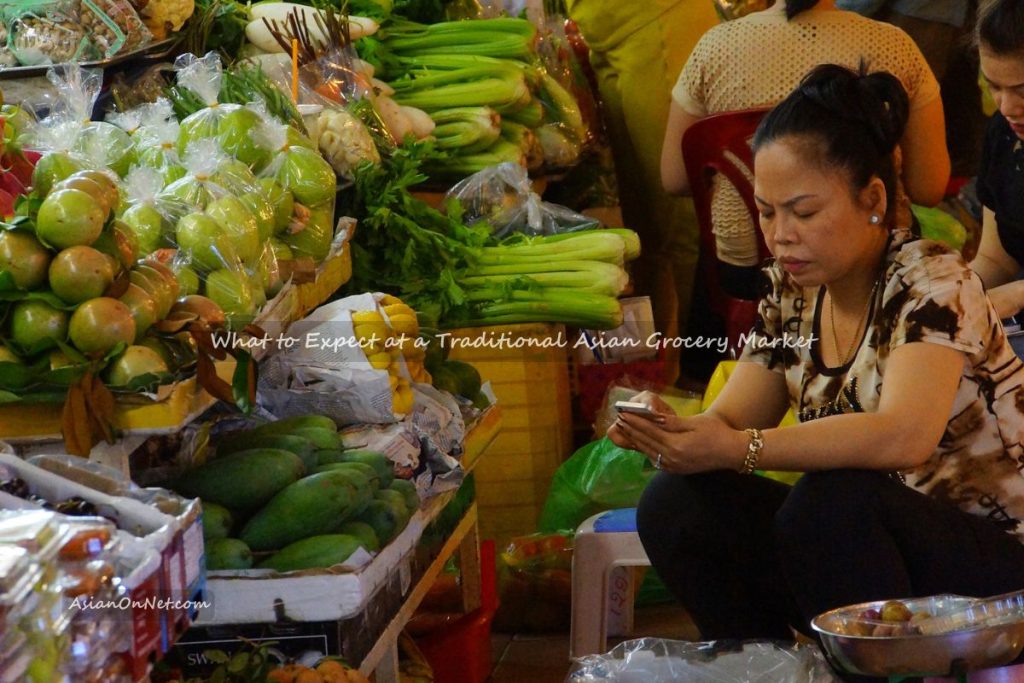
Another key part of what to expect at a traditional Asian grocery market is the incredible variety of pantry essentials. This diversity is central to what to expect at a traditional Asian grocery market — every shelf tells a regional story.
Cultural Etiquette: How to Shop Respectfully
As magical as these markets are, they operate on unspoken rules — and a little respect goes a long way.
Part of understanding what to expect at a traditional Asian grocery market involves knowing how to behave as a respectful visitor. Here are a few tips:
🛍️ Don’t Touch Without Asking
In many cultures, touching produce without intent to buy is considered rude. Point, ask, or wait for the vendor to offer a sample.
💬 Learn a Few Key Phrases
Even basic greetings like “Ni hao,” “Sawasdee,” or “Namaste” can open doors. A simple “How much?” in the local language shows effort.
📸 Be Mindful of Photography
Snapping photos is fine — but ask before photographing people, especially vendors. A smile and a gesture can get you permission (and maybe a free sample).
💵 Carry Cash
Most stalls don’t accept cards. Bring small bills — and don’t be surprised if change comes in coins or candy.
🧺 Bring Your Own Bag
Plastic bags are often free, but bringing a reusable tote is eco-friendly and practical — especially if you’re buying heavy items.
Respectful interaction is a core part of what to expect at a traditional Asian grocery market — it’s not just about buying, but belonging.
More Than Shopping: Markets as Social & Cultural Hubs
Beyond groceries, part of what to expect at a traditional Asian grocery market is witnessing daily community life in action.
These markets aren’t just transactional — they’re social spaces. Neighbors catch up while weighing yams. Kids run errands for grandparents. Elders sip tea at a corner stall, gossiping about the weather and politics.
In Vietnam, the market is where families plan Tet (Lunar New Year) meals. In India, it’s where brides-to-be shop for turmeric and saffron for wedding rituals. In Japan, elderly couples stroll through early, picking up tofu and pickles for dinner.
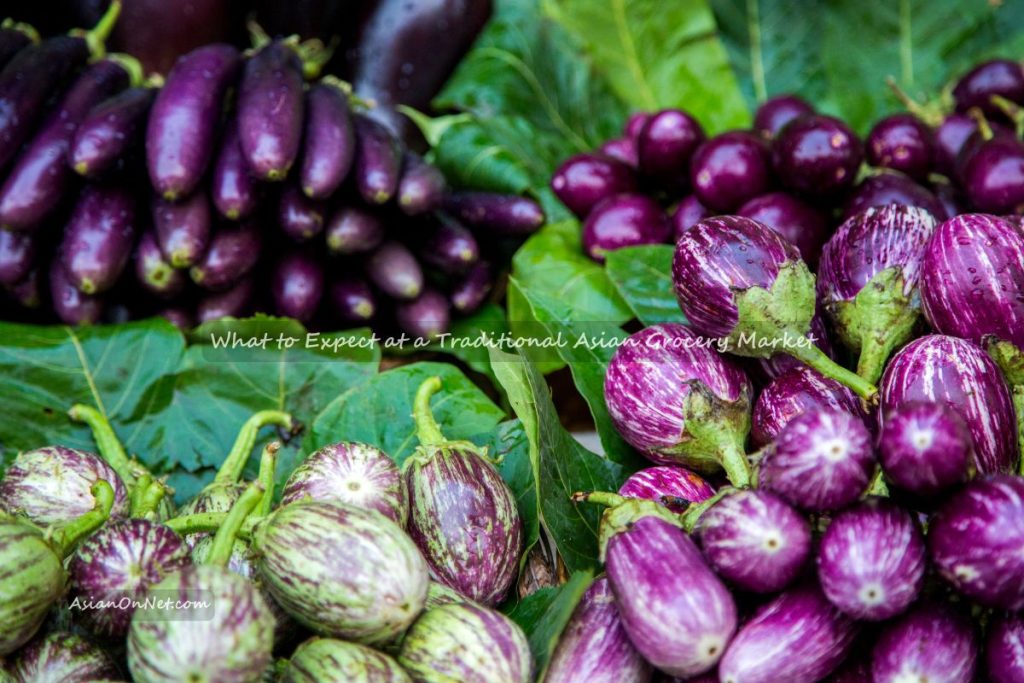
They’re also spaces of cultural preservation. Recipes are passed down verbally. Regional specialties — like Hakka tofu or Assamese bamboo shoot pickle — survive because someone’s still making them by hand.
And in diaspora communities, these markets become anchors of identity. For second-generation immigrants, walking through a Chinatown market might be the closest they get to their parents’ homeland.
This social rhythm is a beautiful dimension of what to expect at a traditional Asian grocery market. It’s not just commerce — it’s continuity.
Regional Differences: From Tokyo to Bangkok to Delhi
While the core experience remains, what to expect at a traditional Asian grocery market varies significantly by country.
Let’s take a quick tour:
🇯🇵 Japan: Order and Precision
Japanese markets like Nishiki in Kyoto or Ameyoko in Tokyo are clean, organized, and visually stunning. Expect beautifully arranged produce, quiet vendors, and premium pricing. Seafood is king — and presentation is everything.
🇹🇭 Thailand: Vibrant and Spicy
Thai markets like Chatuchak or Or Tor Kor are loud, colorful, and full of street food. Durian is sold in designated outdoor zones (due to its smell), and chili vendors wear gloves. Bargaining is common — but always with a smile.
🇮🇳 India: Sensory Overload
Indian markets like Chandni Chowk (Delhi) or Mahalaxmi (Mumbai) are intense — narrow lanes, crowds, and a rainbow of spices in giant mounds. Turmeric, cumin, and masala dominate. Be prepared for enthusiastic haggling and chai breaks.
🇻🇳 Vietnam: Fresh and Fragrant
Vietnamese markets emphasize herbs — mountains of mint, cilantro, and perilla. Fish sauce is poured from giant barrels, and bánh mì vendors work the aisles. Early mornings are best — many close by noon.
🇰🇷 South Korea: Fermented & Fiery
Korean markets like Gwangjang in Seoul are famous for kimchi, bindaetteok (mung bean pancakes), and soju. Fermentation is everywhere — from gochujang to salted shrimp. Don’t be surprised if you’re offered a taste.
So, while the specifics differ, the essence of what to expect at a traditional Asian grocery market stays rooted in authenticity and community.
Tips for First-Time Visitors
For newcomers, knowing what to expect at a traditional Asian grocery market can make all the difference. Here’s how to make the most of your visit:
- Go Early – The best produce is gone by midday. Arrive at 7 or 8 AM for peak freshness.
- Wear Comfortable Shoes – You’ll be standing and walking for hours.
- Bring a Cooler Bag – Especially if buying seafood or perishables.
- Ask Questions – Vendors love sharing knowledge. Ask how to cook something or what’s in season.
- Try Something New – Pick up an unfamiliar fruit or sauce. Worst case? You don’t like it. Best case? You discover your new favorite ingredient.
- Stay Hydrated – Markets can be hot and humid. Grab a coconut or bottled water.
- Keep an Open Mind – Not everything will look or smell familiar — and that’s the point.
Keep these points in mind when you finally experience what to expect at a traditional Asian grocery market firsthand. It’s not about perfection — it’s about participation.
Conclusion: Why These Markets Are Worth the Visit
More than just a place to buy food, a traditional Asian grocery market invites you to see, smell, and feel culture — and now you know exactly what to expect at a traditional Asian grocery market.
It’s a place where:
- Grandmothers teach grandchildren how to pick mangoes
- Strangers become friends over a shared love of spicy noodles
- Tradition and modernity coexist in the flicker of neon lights and the rustle of banana leaves
These markets are not just surviving — they’re thriving. Because in a world of online shopping and instant delivery, people still crave connection. They want to touch their food, talk to the person who grew it, and taste the story behind the sauce.
So next time you see a bustling Asian market — whether in Bangkok, Brooklyn, or Brisbane — step inside. Breathe deep. Smile. And let the culture come to you.
After all, what to expect at a traditional Asian grocery market isn’t just a list of items or rules.
It’s an invitation to belong.
❓ Frequently Asked Questions (FAQs)
What should I expect at a traditional Asian grocery market for the first time?
First-time visitors can expect a lively, sensory-rich environment full of fresh produce, aromatic spices, live seafood, and bustling energy. Learning what to expect at a traditional Asian grocery market helps ease the initial overwhelm — think vibrant colors, bold smells, and friendly (but fast-paced) vendors. Come early, bring cash, and keep an open mind!
Is it okay to take photos in a traditional Asian grocery market?
Yes — but with respect. While the scenery is incredibly photogenic, always ask permission before photographing vendors or customers. Many appreciate a smile and a quick gesture. Understanding what to expect at a traditional Asian grocery market includes recognizing it as a working space, not just a tourist attraction.
How is a traditional Asian grocery market different from a Western supermarket?
Unlike Western supermarkets, traditional Asian grocery markets emphasize freshness, personal interaction, and regional variety. You’ll see live fish, unpackaged produce, and family-run stalls instead of branded aisles. Knowing what to expect at a traditional Asian grocery market prepares you for a more immersive, authentic shopping experience.
Can I find halal or vegetarian options at a traditional Asian grocery market?
Yes! Many traditional Asian grocery markets cater to diverse diets. Look for halal-certified meat sections in Muslim-majority regions or Indian/Pakistani markets. Vegetarian and vegan options abound — from tofu and temple-style snacks to fresh vegetables and plant-based sauces. As part of what to expect at a traditional Asian grocery market, vendors are often happy to guide you based on dietary needs.
Are prices negotiable in a traditional Asian grocery market?
In many cases, yes — especially in Southeast Asia, India, or open-air markets. Bargaining is common for non-weighted items like packaged snacks or household goods, but less so for fresh produce sold by weight. Part of what to expect at a traditional Asian grocery market is learning the local rhythm of haggling: polite, playful, and never aggressive.