






- Introduction
- Why Asian Wellness Habits Are Worth Understanding
- Eating Warm And Simple Meals
- Eating With Balance
- Drinking Tea Mindfully
- Walking As Everyday Movement
- Gentle Stretching And Mobility
- Starting The Day Slowly
- Respecting Rest
- Eating With Family
- Seasonal Eating
- Using Herbs Thoughtfully
- Mindful Eating
- Keeping The Home Calm
- Spending Time In Nature
- Breath And Quiet Moments
- Respect For Elders And Community
- Balancing Work And Daily Life
- Learning From Culture Without Copying Blindly
- Common Mistakes To Avoid
- Simple Checklist For Everyday Wellness
- Conclusion
- FAQ
- What Are Asian Wellness Habits?
- Are Asian Wellness Habits Medical Treatments?
- What Is The Easiest Asian Wellness Habit To Start?
- Do All Asian Countries Share The Same Wellness Habits?
- Are Herbal Habits Always Safe?
- How Can I Add More Balance To Daily Life?
- Is Tea An Important Asian Wellness Habit?
- Can Children Follow Asian Wellness Habits?
- How Can I Learn Respectfully From Asian Traditions?
- What Is The Main Idea Behind Asian Wellness Habits?
Introduction
Asian Wellness Habits are often simple, practical, and connected to daily life. Across Asia, many people build wellness through food, tea, family routines, gentle movement, rest, nature, mindfulness, and respect for balance. These habits are not always complicated. Many are small choices repeated every day.
For asianonnet.com readers, Asian Wellness Habits can be understood as lifestyle inspiration, not strict rules. Asia is diverse, and every country, family, and community has its own traditions. A habit from Japan may look different from one in Thailand, Korea, India, China, Vietnam, Indonesia, or the Philippines.
This guide explores gentle Asian Wellness Habits that can support a calmer and more balanced everyday routine without making unrealistic health promises.
👉 “Readers learning about Asian wellness habits may also find this guide to Medicinal Cannabis In Thailand useful for understanding health information more carefully.”
Why Asian Wellness Habits Are Worth Understanding
Asian Wellness Habits are worth understanding because many of them focus on balance instead of extremes. Rather than trying to change everything at once, these habits often encourage small daily routines.
They may include:
- Eating warm meals
- Drinking tea
- Walking regularly
- Stretching gently
- Spending time with family
- Resting after busy days
- Respecting seasonal foods
- Using herbs thoughtfully
- Creating calm morning routines
- Taking care of elders
- Spending time in nature
- Practising mindfulness
- Eating slowly
- Keeping daily life simple
These habits may look ordinary, but ordinary habits often shape how people feel in daily life.
Eating Warm And Simple Meals
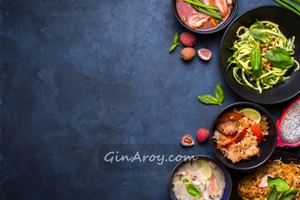
Warm meals are common in many Asian cultures. Rice, soup, noodles, vegetables, tofu, fish, eggs, chicken, herbs, and broth-based dishes are everyday foods in many homes.
A warm meal can feel comforting because it is simple and familiar. Many families prefer cooked dishes instead of cold meals, especially in the morning or evening.
Simple meal ideas may include:
- Rice with vegetables
- Soup with tofu
- Noodle soup
- Steamed fish
- Stir-fried greens
- Congee
- Lentil dishes
- Curry with vegetables
- Egg dishes
- Herbal soup
- Miso soup
- Clear broth
One of the easiest Asian Wellness Habits to try is building meals around simple ingredients rather than overly complicated food trends.
Eating With Balance
Many Asian food traditions focus on balance. A meal may include rice or noodles, vegetables, protein, soup, herbs, and small side dishes. The idea is not always about eating one perfect food. It is about making the whole meal feel balanced.
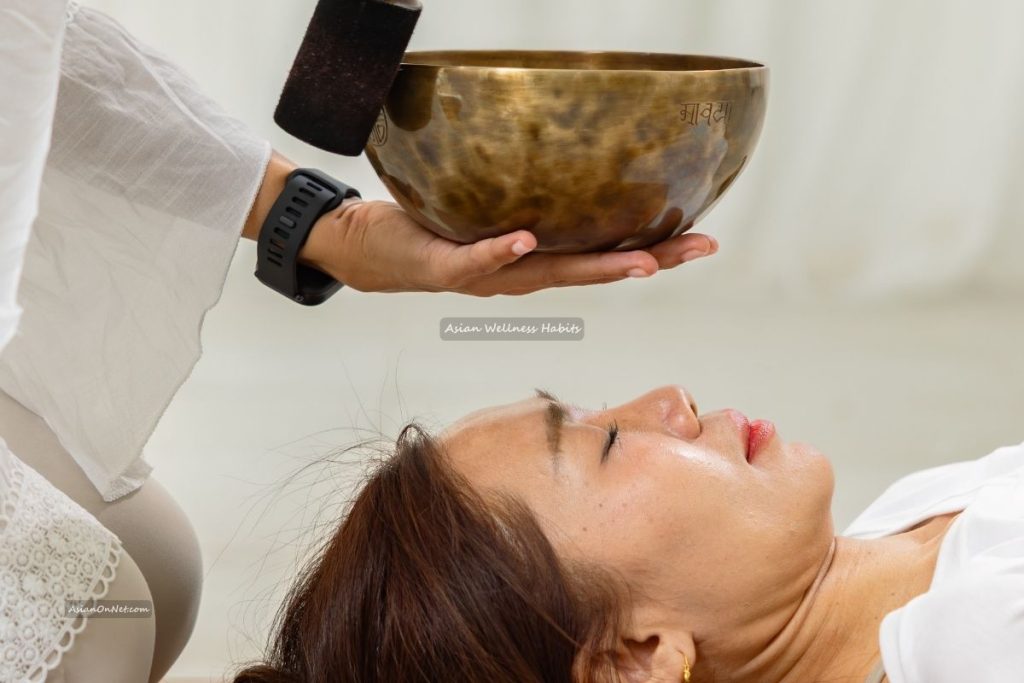
A balanced plate may include:
- A grain such as rice or noodles
- Vegetables
- Protein
- Soup or broth
- Herbs or spices
- Fruit
- Tea or water
This does not need to be strict. The goal is to create meals that feel satisfying, varied, and practical.
Asian Wellness Habits often work best when they are flexible enough for real life.
Drinking Tea Mindfully
Tea is part of daily life in many Asian cultures. Green tea, jasmine tea, oolong tea, black tea, herbal tea, barley tea, ginger tea, pandan tea, lemongrass tea, and chrysanthemum tea are enjoyed in different places.
Tea can become a small daily pause. The habit is not only about the drink itself. It is also about slowing down.
A mindful tea moment may include:
- Sitting quietly
- Taking a break from screens
- Drinking slowly
- Sharing tea with family
- Choosing unsweetened tea
- Enjoying warm water
- Using tea as an afternoon pause
- Ending a meal calmly
Tea should be enjoyed in a way that fits your body and lifestyle. People sensitive to caffeine can choose caffeine-free herbal options or drink tea earlier in the day.
Walking As Everyday Movement
Walking is one of the most practical Asian Wellness Habits because it is simple and accessible for many people. In many Asian cities and communities, walking is part of daily life through markets, neighbourhoods, parks, temples, train stations, school routes, and evening strolls.
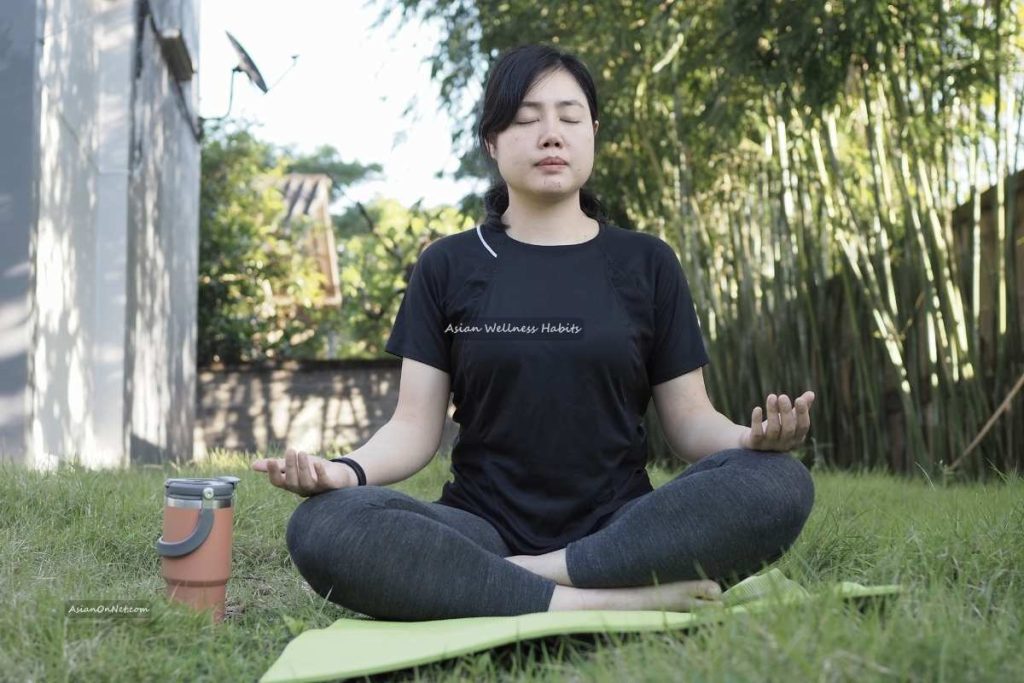
Walking can be used for:
- Getting fresh air
- Clearing the mind
- Moving after meals
- Spending time with family
- Exploring the neighbourhood
- Reducing screen time
- Building a gentle routine
- Enjoying parks or riversides
A short walk can be easier to keep than an intense exercise plan.
The key is consistency, comfort, and safety.
Gentle Stretching And Mobility
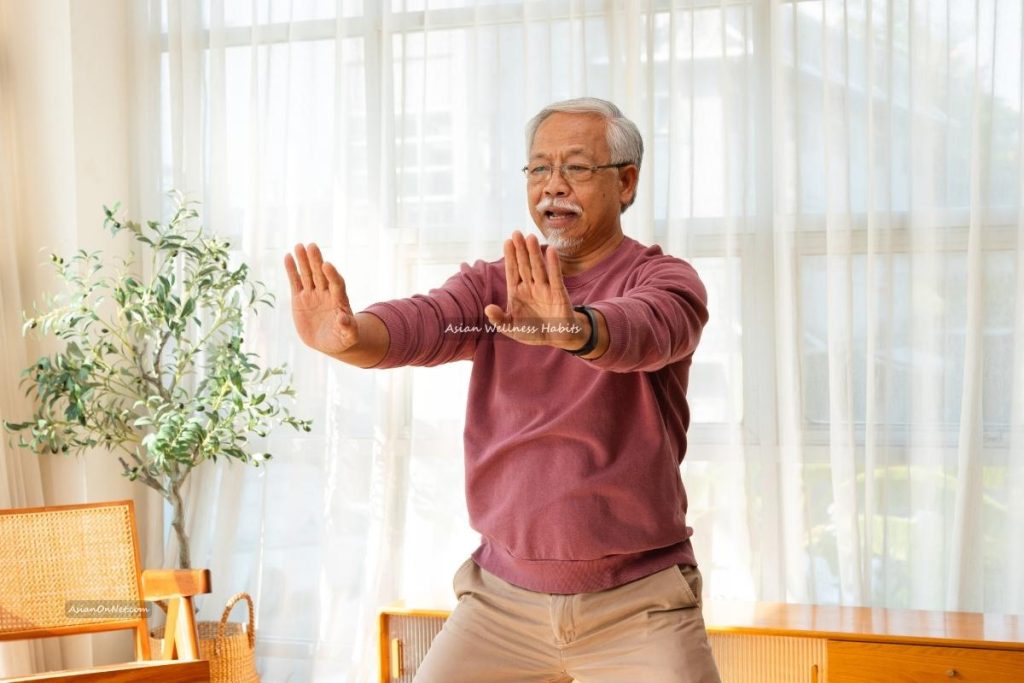
Gentle stretching is part of many daily wellness routines across Asia. People may stretch in the morning, after sitting, before sleep, or during a break from work.
Stretching can help the body feel less stiff, especially after long hours at a desk, in traffic, or using screens.
Simple gentle movements may include:
- Neck rolls
- Shoulder circles
- Side stretches
- Wrist stretches
- Ankle circles
- Forward folds
- Gentle back stretches
- Slow breathing with movement
Stretching should not feel painful. Move slowly and stop if something feels wrong.
Asian Wellness Habits should support comfort, not pressure.
Starting The Day Slowly
A calm morning can affect the whole day. Many people in Asian households start the day with small routines such as warm drinks, simple breakfast, prayer, quiet cleaning, stretching, preparing food, or greeting family members.
A slow morning may include:
- Drinking water or tea
- Opening windows
- Stretching
- Making a simple breakfast
- Preparing clothes
- Tidying one small area
- Writing a short plan
- Avoiding the phone for a few minutes
- Taking a quiet breath before leaving
Not every morning will be peaceful. But even a small routine can create a better start.
Respecting Rest
Rest is an important part of wellness. In busy modern life, people often think wellness means doing more. But many Asian Wellness Habits also remind us to pause, recover, and respect the body’s need for rest.
Rest may include:
- Taking short breaks
- Sleeping at a regular time
- Avoiding too much late-night screen use
- Having quiet evenings
- Resting after travel
- Taking breaks during hot weather
- Slowing down after meals
- Creating calm bedtime routines
Rest should not be seen as laziness. It is part of a balanced life.
Eating With Family
Family meals are important in many Asian cultures. Eating together can create connection, conversation, memory, and routine.
A family meal does not need to be perfect. It can be simple rice, soup, vegetables, noodles, curry, or takeaway shared at home.
Family meals may help people:
- Slow down
- Talk together
- Share food
- Teach children manners
- Pass down recipes
- Care for elders
- Create daily structure
- Feel connected
Asian Wellness Habits are often social. Wellness is not only individual. It can also come from belonging.
Seasonal Eating
Seasonal eating is common in many traditional Asian food cultures. People may choose fruits, vegetables, herbs, soups, and drinks based on weather, harvest, and local availability.
Seasonal eating can make meals feel more connected to nature.
Examples may include:
- Cooling fruits in hot weather
- Warm soups in rainy weather
- Fresh herbs in local markets
- Seasonal vegetables
- Tropical fruit
- Fermented foods
- Fresh coconut
- Root vegetables
- Tea suited to the season
Seasonal habits do not need to be complicated. They can begin by buying fresh local produce when available.
Using Herbs Thoughtfully
Herbs are important in many Asian cultures. They are used in cooking, tea, soups, baths, oils, and traditional wellness routines.
Common herbs and ingredients may include:
- Ginger
- Lemongrass
- Turmeric
- Holy basil
- Mint
- Pandan
- Coriander
- Garlic
- Galangal
- Kaffir lime
- Green tea
- Cinnamon
- Cardamom
- Chrysanthemum
- Goji berries
Herbs can add flavour, aroma, and cultural meaning to daily life. But natural does not always mean risk-free. People who are pregnant, breastfeeding, taking medicine, or living with health conditions should be careful with strong herbal products or supplements.
For everyday life, using herbs as part of normal food is usually a gentle place to start.
Mindful Eating
Mindful eating is another simple habit. It means paying attention to food, taste, hunger, fullness, and the act of eating.
In many Asian food cultures, meals are shared, balanced, and eaten with attention to texture, temperature, aroma, and harmony.
Mindful eating may include:
- Eating slowly
- Sitting down for meals
- Chewing well
- Not rushing
- Not eating only in front of screens
- Enjoying small portions of many dishes
- Listening to hunger
- Stopping before feeling too full
- Appreciating the food
Mindful eating is not about strict dieting. It is about building a calmer relationship with food.
Keeping The Home Calm
Home routines are part of Asian Wellness Habits in many families. A calm home can support rest, focus, family time, and emotional balance.
Simple home habits include:
- Removing shoes at the door
- Keeping entryways tidy
- Cleaning small areas daily
- Opening windows
- Using soft lighting
- Creating a tea corner
- Keeping meals simple
- Reducing clutter
- Caring for plants
- Using natural scents lightly
- Creating quiet time in the evening
A calm home does not need to look perfect. It only needs to feel supportive.
Spending Time In Nature
Nature is important in many Asian traditions, from gardens and rice fields to mountains, rivers, forests, beaches, temples, and neighbourhood parks.
Spending time in nature may include:
- Walking in a park
- Sitting near water
- Visiting a garden
- Caring for plants
- Watching sunrise or sunset
- Visiting the countryside
- Walking under trees
- Taking children outside
- Eating outdoors
- Taking a quiet break in fresh air
Even in big cities, small moments with nature can help people feel more grounded.
Breath And Quiet Moments
Quiet breathing is a simple habit found in many wellness traditions. It may be connected to meditation, prayer, yoga, tai chi, martial arts, temple visits, or personal reflection.
A quiet moment can be simple:
- Sit comfortably
- Relax the shoulders
- Breathe slowly
- Notice the body
- Pause before reacting
- Let the mind settle
- Return to daily tasks calmly
This does not need to be religious or complicated. It can be a small pause during a busy day.
Asian Wellness Habits often value the space between activities, not only the activities themselves.
Respect For Elders And Community
In many Asian cultures, wellness is connected to family and community. Respect for elders, helping relatives, greeting neighbours, visiting family, and sharing food are part of everyday social life.
Community habits may include:
- Sharing meals
- Visiting relatives
- Helping neighbours
- Listening to elders
- Teaching children manners
- Joining festivals
- Supporting local shops
- Respecting traditions
- Caring for family members
- Remembering ancestors
Social connection can be an important part of emotional wellbeing. A healthy life is often built through relationships, not only personal routines.
Balancing Work And Daily Life
Modern life in Asia can be very busy. Cities, traffic, school pressure, long work hours, and digital habits can make balance difficult.
Simple balancing habits may include:
- Taking short breaks
- Walking after work
- Eating proper meals
- Turning off screens earlier
- Keeping one quiet evening
- Sharing chores
- Planning family meals
- Resting on weekends
- Spending time outdoors
- Saying no when needed
Asian Wellness Habits should not become another source of pressure. They should help daily life feel more manageable.
Learning From Culture Without Copying Blindly
Asia is not one single culture. Wellness habits vary widely between countries and communities. It is important to learn respectfully and avoid treating Asian traditions as trends without context.
Respectful learning means:
- Understanding the cultural background
- Avoiding exaggerated claims
- Not treating traditions as quick fixes
- Listening to people from those cultures
- Giving credit to origins
- Adapting habits thoughtfully
- Avoiding stereotypes
- Keeping practices simple and respectful
The best approach is curiosity with respect.
Common Mistakes To Avoid
When trying Asian Wellness Habits, avoid turning them into strict rules.
Common mistakes include:
- Expecting instant results
- Copying trends without context
- Using herbs without checking safety
- Treating wellness as a competition
- Ignoring rest
- Overcomplicating routines
- Believing every online claim
- Replacing medical care with lifestyle habits
- Forcing family members to follow the same routine
- Thinking one culture represents all of Asia
Good habits should feel supportive, realistic, and safe.
Simple Checklist For Everyday Wellness
Use this checklist to build a gentle routine:
- I ate a simple balanced meal
- I drank water or tea
- I moved my body gently
- I took a short break
- I spent a moment away from screens
- I connected with someone
- I spent time in nature or fresh air
- I rested when tired
- I used herbs thoughtfully
- I kept one part of my home calm
- I avoided rushing every moment
- I respected my own limits
This checklist is not about perfection. It is about noticing small daily choices.
👉 “Readers learning about Asian wellness habits may also find this guide to Ancient Ayurvedic healing practices for health helpful for understanding traditional health ideas.”
Conclusion
Asian Wellness Habits can offer simple inspiration for everyday life. They often focus on balance, warm meals, tea, walking, gentle movement, family connection, rest, seasonal foods, herbs, nature, and calm routines.
For asianonnet.com readers, the most useful lesson is that wellness does not need to be extreme. Small habits can fit into normal daily life. A warm meal, a quiet cup of tea, a short walk, a tidy corner, a family conversation, or a few calm breaths can all become meaningful parts of the day.
Asia is diverse, so these habits should be explored with respect and flexibility. They are not medical treatments or strict rules. They are gentle lifestyle ideas that can help people build more balance and appreciation in everyday life.
By choosing the Asian Wellness Habits that feel realistic, safe, and meaningful, readers can create a calmer daily routine one small step at a time.
FAQ
What Are Asian Wellness Habits?
Asian Wellness Habits are everyday lifestyle practices inspired by Asian cultures, such as mindful eating, tea, walking, gentle movement, family meals, rest, herbs, and seasonal living.
Are Asian Wellness Habits Medical Treatments?
No. These habits are lifestyle ideas, not medical treatments. People with health concerns should speak with qualified healthcare professionals.
What Is The Easiest Asian Wellness Habit To Start?
A simple habit to start is drinking tea mindfully, taking a short walk, eating a warm meal, or creating a calm bedtime routine.
Do All Asian Countries Share The Same Wellness Habits?
No. Asia is very diverse. Wellness habits vary between countries, regions, families, religions, climates, and lifestyles.
Are Herbal Habits Always Safe?
Not always. Herbs can affect people differently. Strong herbal products or supplements should be used carefully, especially with medicine, pregnancy, breastfeeding, or health conditions.
How Can I Add More Balance To Daily Life?
Start with small steps such as regular meals, gentle movement, rest, less screen time before bed, family connection, and short quiet moments.
Is Tea An Important Asian Wellness Habit?
Tea is important in many Asian cultures, but the type of tea and meaning can vary. It can be used as a simple daily pause.
Can Children Follow Asian Wellness Habits?
Children can enjoy simple habits like family meals, outdoor play, warm food, gentle routines, and less screen time. Avoid strong herbs or supplements unless guided by a professional.
How Can I Learn Respectfully From Asian Traditions?
Learn the cultural background, avoid stereotypes, do not exaggerate claims, and adapt practices thoughtfully.
What Is The Main Idea Behind Asian Wellness Habits?
The main idea is balance. Many habits focus on simple daily routines that support comfort, connection, rest, movement, food, and mindful living.