




- Introduction
- Asia Does Not Have One Family Lifestyle
- Traditional Values In Modern Homes
- Multigenerational Family Living
- Smaller Urban Households
- Living In Smaller Spaces
- Working Parents
- Changing Family Roles
- Childcare And Grandparent Support
- Daycare And Preschool
- Education And Family Priorities
- Local, Bilingual, And International Schools
- Homework And After-School Activities
- Shared Family Meals
- Home Cooking And Food Delivery
- Markets, Supermarkets, And Convenience Stores
- Technology In Family Life
- Managing Children’s Screen Time
- Staying Connected With Distant Relatives
- Transport And Daily Routines
- Family Life In Hot And Humid Climates
- Air Quality And Urban Living
- Weekend Family Activities
- Shopping Centres As Family Spaces
- Celebrations And Traditions
- Language In Multicultural Families
- International And Cross-Cultural Families
- Caring For Older Relatives
- Family Finances
- Work-Life Balance
- Community Support
- Challenges Facing Modern Families
- Creating A Practical Family Routine
- Keeping Traditions Without Rejecting Change
- Conclusion
- FAQ
- What Is Modern Family Life Like In Asia?
- Are Multigenerational Homes Common In Asia?
- How Has Technology Changed Asian Family Life?
- Do Most Asian Families Eat Together?
- What Education Options Are Available?
- How Do Working Parents Manage Childcare?
- Are Traditional Family Values Disappearing?
- What Challenges Do Urban Families Face?
- How Can Families Improve Work-Life Balance?
- What Makes Asian Family Life Diverse?
Introduction
Family life across Asia is changing as cities grow, technology becomes more important, education develops, and work patterns become increasingly flexible and international. At the same time, many households continue to value family meals, respect for older relatives, cultural celebrations, and support between generations.
The modern family lifestyle in Asia cannot be described by one routine or one type of household. Asia includes many countries, languages, religions, income levels, climates, and cultural traditions. A family living in central Tokyo may have a very different daily life from a family in rural Thailand, suburban India, coastal Vietnam, or a smaller town in Indonesia.
Some families live in multigenerational homes, while others live as smaller households in apartments. Some children attend local public schools, while others study at private, bilingual, or international schools. Parents may work in offices, factories, family businesses, farms, schools, hospitals, or remotely from home.
This guide explores the modern family lifestyle in Asia through practical topics such as housing, work, education, childcare, food, transport, technology, traditions, recreation, and changing family roles.
👉 “Families interested in local culture may also explore these traditional performances to enjoy while visiting Thailand for more insight into the country’s music, dance, and storytelling.”
Asia Does Not Have One Family Lifestyle
It is important to avoid treating Asia as a single culture.
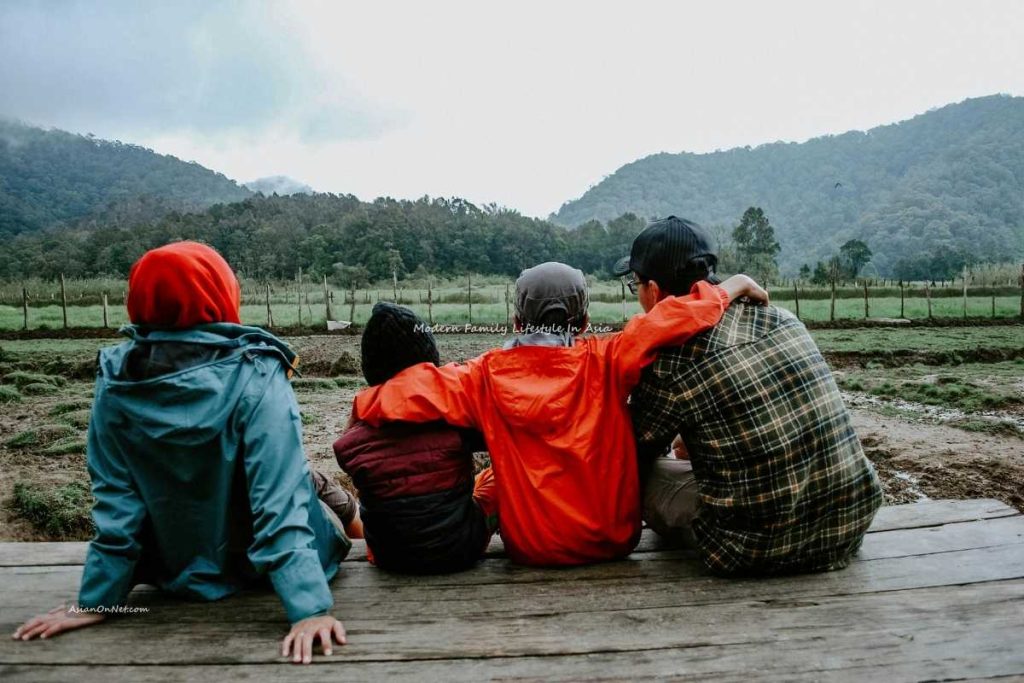
Family life differs according to:
- Country
- Region
- Language
- Religion
- Income
- Education
- Urban or rural location
- Housing
- Employment
- Access to transport
- Family size
- Local customs
Even within one city, families may have completely different routines.
A high-income household may use private transport, childcare services, and international education. Another family may depend on grandparents, public schools, neighbourhood markets, and public transport.
The modern family lifestyle in Asia is therefore best understood as a combination of shared regional patterns and highly local experiences.
Traditional Values In Modern Homes
Many Asian families continue to value respect for parents, responsibility toward relatives, education, cooperation, and family loyalty.
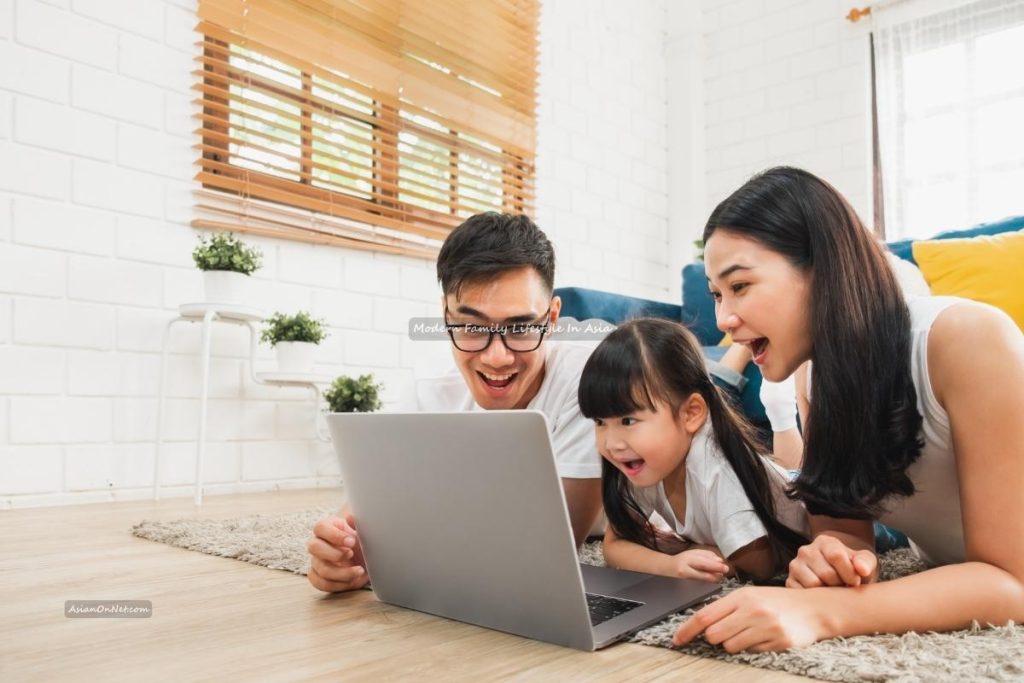
These values may appear in modern ways.
For example:
- Adult children may call parents through video apps
- Families may organise celebrations in apartment buildings
- Grandparents may help with childcare
- Relatives may share financial responsibilities
- Family groups may communicate through messaging apps
- Traditional meals may be ordered through delivery services
- Religious ceremonies may be shared online
Modern technology does not necessarily replace tradition. In many households, it changes how traditions are maintained.
This mixture of continuity and change is an important part of the modern family lifestyle in Asia.
Multigenerational Family Living
Multigenerational households remain common in many parts of Asia.
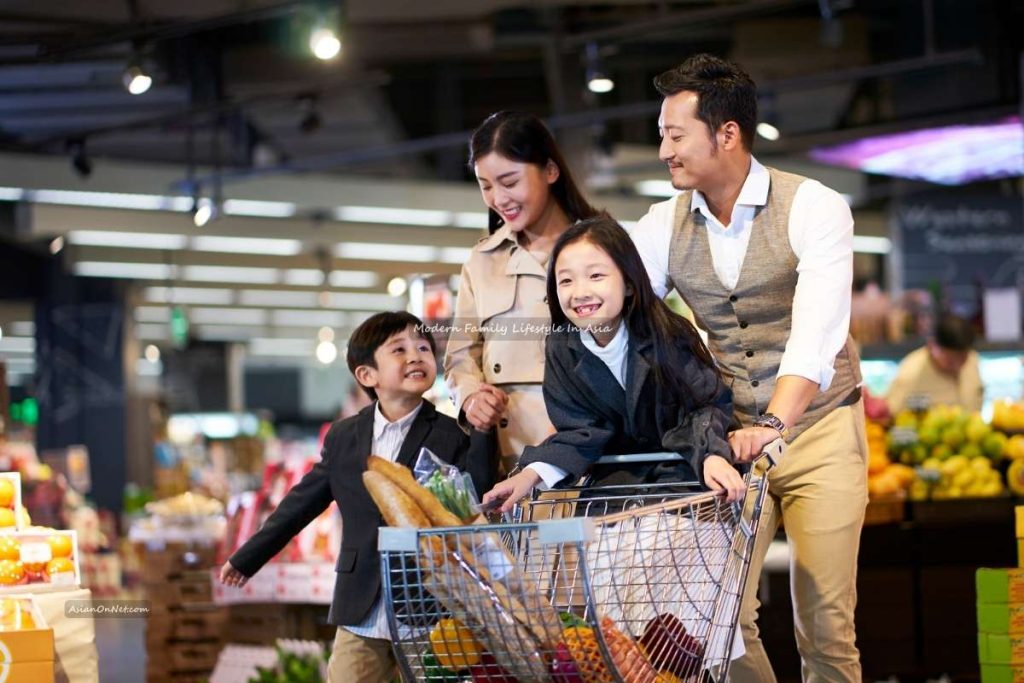
A home may include:
- Children
- Parents
- Grandparents
- Unmarried adult relatives
- Other extended family members
This arrangement can provide practical support. Grandparents may help supervise children, prepare meals, or manage the home while parents work.
Adult family members may also share rent, mortgage payments, transport, groceries, and healthcare responsibilities.
However, multigenerational living can also create challenges. Different generations may disagree about parenting, privacy, education, household rules, or money.
Successful shared living often requires clear communication, realistic expectations, and respect for personal space.
Smaller Urban Households
In large Asian cities, housing costs and job opportunities have contributed to the growth of smaller households.
Parents and children may live separately from grandparents in:
- Apartments
- Condominiums
- Townhouses
- Compact urban homes
- Employer-provided housing
Smaller households may provide more privacy and independence. They can also reduce access to everyday family support.
Parents living far from relatives may depend more on:
- Daycare
- Domestic help
- After-school programmes
- Neighbours
- Friends
- Parent groups
- Paid babysitters
The modern family lifestyle in Asia often involves balancing the independence of a smaller household with the desire to remain connected to extended family.
Living In Smaller Spaces
Many urban families live in compact apartments.
Small-space living may require:
- Multifunctional furniture
- Careful storage
- Shared bedrooms
- Foldable tables
- Balcony laundry areas
- Limited toy collections
- Regular decluttering
- Use of community facilities
Families may use parks, shopping centres, libraries, indoor play areas, cafés, and community spaces as extensions of the home.
Children may complete homework at a dining table that is also used for meals and family activities.
A comfortable family home does not need to be large. Organisation, safety, natural light, ventilation, and access to nearby services may matter more than total floor space.
Working Parents
Two-income households are common in many Asian cities.
Parents may work:
- Full-time
- Part-time
- Remotely
- In shifts
- In family businesses
- As freelancers
- In hybrid office arrangements
- Across different time zones
Working parents often need to coordinate school schedules, meals, transport, childcare, housework, and family time.
A typical weekday may include an early school journey, a long commute, after-school activities, evening homework, and a late family meal.
The modern family lifestyle in Asia can therefore feel highly organised and time-sensitive.
Changing Family Roles
Traditional expectations about work, childcare, and housework are changing, although the pace differs between countries and households.
In some families:
- Both parents earn income
- Fathers take a larger childcare role
- Mothers manage businesses or professional careers
- Grandparents assist with daily routines
- Domestic tasks are divided more evenly
- Older children help with household responsibilities
- Parents work from home
Not every family has equal freedom to choose these arrangements. Workplace policies, income, childcare access, and social expectations all influence family roles.
Open discussion about responsibilities can reduce misunderstandings and prevent one person from carrying most of the household workload.
Childcare And Grandparent Support
Grandparents often play an important role in childcare.
They may:
- Collect children from school
- Prepare meals
- Supervise homework
- Care for babies
- Teach language and traditions
- Provide emotional support
- Help during school holidays
This support can strengthen relationships between generations and reduce childcare costs.
However, parents and grandparents may have different views about discipline, food, screen time, sleep, and education.
Clear agreements can help families benefit from grandparent support while respecting the parents’ decisions.
Daycare And Preschool
Urban families may use nurseries, daycare centres, preschools, kindergartens, or home-based childcare.
Parents commonly consider:
- Location
- Opening hours
- Staff qualifications
- Safety
- Cleanliness
- Language
- Class size
- Meals
- Learning approach
- Outdoor space
- Transport
- Cost
Long working hours can make opening times especially important.
Some families choose childcare close to the home, while others prefer a centre near a parent’s workplace.
The availability and quality of childcare strongly influence the modern family lifestyle in Asia, particularly for households with two working parents.
Education And Family Priorities
Education is a major family priority in many Asian societies.
Parents may invest time and money in:
- School fees
- Books
- Tutoring
- Language classes
- Music lessons
- Sports
- Test preparation
- Technology
- Transport
- University planning
Strong educational support can create opportunities, but excessive pressure may affect children’s rest, confidence, and enjoyment of learning.
A balanced approach considers academic development alongside:
- Sleep
- Play
- Friendships
- Creativity
- Physical activity
- Family time
- Emotional wellbeing
Education is an important part of the modern family lifestyle in Asia, but it does not need to occupy every free hour.
Local, Bilingual, And International Schools
Families may choose between different education systems.
Options can include:
- Public schools
- Private schools
- Religious schools
- Bilingual programmes
- International schools
- Homeschooling
- Online learning
- Specialised schools
The right choice depends on language, budget, location, future plans, learning needs, and family values.
International families may consider whether a child will remain in one country or move between education systems.
Local schools can offer language development and community connection. International schools may provide familiar curricula but can be expensive.
Homework And After-School Activities
After-school schedules can become busy.
Children may attend:
- Language lessons
- Mathematics tutoring
- Music classes
- Swimming
- Football
- Dance
- Martial arts
- Art programmes
- Religious education
- Coding classes
Activities can build skills and friendships, but children also need unstructured time.
Families can ask:
- Does the child enjoy the activity?
- Is there enough time for sleep?
- Is homework becoming stressful?
- Does the weekly schedule include free play?
- Is travel time too long?
- Can the family afford the activity comfortably?
The best schedule is not necessarily the busiest one.
Shared Family Meals
Food remains an important part of family life throughout Asia.
Shared meals may include several dishes placed in the centre of the table. Family members can take small portions and combine different flavours.
Common family eating patterns may include:
- Rice with shared dishes
- Noodles
- Soups
- Curries
- Stir-fries
- Grilled food
- Vegetable dishes
- Fresh fruit
- Street food
- Home delivery
A shared meal creates time for conversation and connection.
Busy households may not eat together every day, but even a few regular family meals each week can become meaningful.
Home Cooking And Food Delivery
Modern families often combine home cooking with prepared food.
Home meals may be easier when families:
- Plan simple menus
- Prepare ingredients in advance
- Cook rice in a rice cooker
- Use seasonal vegetables
- Reheat suitable leftovers
- Share cooking responsibilities
- Keep quick meals available
Delivery apps have made restaurant food more convenient in many Asian cities.
They can help during busy evenings, but frequent delivery may increase spending and make portion, salt, sugar, or food quality harder to control.
The modern family lifestyle in Asia often involves finding a practical balance between traditional home cooking and modern convenience.
Markets, Supermarkets, And Convenience Stores
Families may shop at:
- Fresh markets
- Street markets
- Supermarkets
- Hypermarkets
- Convenience stores
- Local grocery shops
- Online platforms
- Wholesale stores
Fresh markets can provide affordable vegetables, fruit, meat, seafood, and prepared dishes.
Supermarkets may be easier for labelled products, imported food, household supplies, and air-conditioned shopping.
Convenience stores are useful for quick purchases but may encourage greater use of packaged food.
Many families use several shopping options rather than relying on only one.
Technology In Family Life
Technology affects communication, education, entertainment, work, shopping, transport, and healthcare.
Families may use smartphones for:
- Messaging relatives
- School communication
- Homework
- Video calls
- Banking
- Food delivery
- Shopping
- Maps
- Transport
- Medical appointments
- Entertainment
Technology can make daily life easier, particularly for families separated by distance.
It can also create concerns about screen time, privacy, online safety, sleep, and reduced face-to-face conversation.
Digital habits are now a central part of the modern family lifestyle in Asia.
Managing Children’s Screen Time
Screen rules work best when they are realistic and suitable for the child’s age.
Families may consider:
- Screen-free meals
- Device-free bedtime routines
- Age-appropriate content
- Parental controls
- Shared viewing
- Breaks for movement
- Clear schoolwork rules
- Safe online communication
- Keeping devices out of bedrooms at night
Adults also influence children through their own habits.
It is difficult to enforce a screen-free meal when parents continue checking messages at the table.
The goal is not necessarily to remove technology, but to use it with purpose and boundaries.
Staying Connected With Distant Relatives
Many families live across different cities or countries.
Video calls and family chat groups help relatives share:
- Birthdays
- School achievements
- Photos
- Everyday news
- Holiday greetings
- Family decisions
- Health updates
- Cultural celebrations
Children can maintain relationships with grandparents and cousins even when travel is difficult.
Digital communication cannot completely replace visiting in person, but it can support family connection between visits.
Transport And Daily Routines
Family transport varies widely.
Common options include:
- Private cars
- Motorcycles
- Buses
- Trains
- Metro systems
- Taxis
- Ride-hailing services
- School buses
- Bicycles
- Walking
In large cities, commuting can take a significant part of the day.
Families often choose homes and schools partly according to transport access.
Parents should consider road safety, suitable child restraints, helmets, pollution, weather, and the safety of walking routes.
Reliable transport can make the modern family lifestyle in Asia more manageable, while long journeys may reduce family and rest time.
Family Life In Hot And Humid Climates
Much of Asia has warm, humid, tropical, or monsoon weather.
Families may adapt by:
- Planning outdoor activities early
- Carrying water
- Using sun protection
- Choosing lightweight clothing
- Taking indoor breaks
- Preparing for sudden rain
- Using mosquito protection
- Checking air quality
- Keeping spare clothes for children
Shopping centres, libraries, museums, cafés, and indoor play areas are often popular during very hot or rainy periods.
Weather affects school journeys, exercise, food storage, and weekend plans.
Air Quality And Urban Living
Air pollution can be a concern in some Asian cities and seasons.
Families may:
- Check local air-quality reports
- Reduce outdoor activity during poor conditions
- Keep windows closed when advised
- Use appropriate air filtration
- Follow local health guidance
- Choose indoor activities
- Seek medical advice for respiratory symptoms
Air-quality needs vary between locations and individuals.
Children, older adults, and people with respiratory conditions may need extra care.
Weekend Family Activities
Weekends provide an opportunity to spend time together outside work and school routines.
Family activities may include:
- Visiting parks
- Exploring markets
- Going to museums
- Eating at local restaurants
- Attending festivals
- Swimming
- Visiting relatives
- Watching films
- Cooking together
- Taking day trips
- Joining community events
- Playing at home
Activities do not need to be expensive.
A picnic, neighbourhood walk, family meal, or visit to a public park can be just as meaningful as a major attraction.
Shopping Centres As Family Spaces
In many Asian cities, shopping centres serve as more than retail spaces.
Families use them for:
- Meals
- Cinema visits
- Indoor playgrounds
- Education centres
- Supermarkets
- Medical clinics
- Banking
- Social meetings
- Air-conditioned walking
- Children’s activities
This is particularly useful during heat, rain, or poor air quality.
However, families can balance commercial activities with parks, libraries, cultural spaces, and community events.
Celebrations And Traditions
Family celebrations remain important even as lifestyles change.
These may include:
- Lunar New Year
- Songkran
- Diwali
- Eid
- Christmas
- Vesak
- Obon
- Mid-Autumn Festival
- Local harvest festivals
- Weddings
- Birthdays
- Religious ceremonies
Traditions may involve food, clothing, temple or religious visits, gifts, music, and extended family gatherings.
Urban families may adjust celebrations to apartment living, work schedules, school calendars, or international family members.
Maintaining traditions can help children understand family history and cultural identity.
Language In Multicultural Families
Some Asian families use more than one language at home.
Children may speak:
- A local language
- A national language
- A regional dialect
- English
- A parent’s heritage language
- A school language
Multilingual family life can create valuable skills but may require patience and consistency.
Parents may support language development through:
- Conversation
- Books
- Songs
- Video calls with relatives
- Cultural events
- Weekend classes
- Travel
- Age-appropriate media
Families do not need to use every language perfectly. Regular, positive exposure is often more helpful than pressure.
International And Cross-Cultural Families
International marriages and cross-cultural households are increasingly visible across Asia.
These families may combine different:
- Languages
- Foods
- Religions
- Parenting expectations
- Holiday traditions
- Education plans
- Citizenship arrangements
- Communication styles
Differences can enrich family life, but they may also require discussion and compromise.
Parents may need to decide which holidays to celebrate, which languages to use, and where the family plans to live in the future.
The modern family lifestyle in Asia often includes cultural mixing rather than a choice between only one tradition and another.
Caring For Older Relatives
Ageing populations and longer life expectancy are changing family responsibilities in several Asian societies.
Families may help older relatives with:
- Medical appointments
- Transport
- Meals
- Medication
- Housing
- Finances
- Technology
- Social contact
- Daily care
Some older adults live with family, while others live independently or use professional care services.
Care responsibilities can be emotionally and financially demanding.
Families may need to divide tasks, seek community support, and protect caregivers from exhaustion.
Family Finances
Modern family expenses may include:
- Housing
- Education
- Childcare
- Transport
- Food
- Healthcare
- Insurance
- Technology
- Activities
- Support for relatives
- Savings
Urban living and private education can be especially expensive.
Useful habits include:
- Creating a monthly budget
- Discussing major purchases
- Building emergency savings
- Comparing school and childcare costs
- Limiting unnecessary subscriptions
- Planning for healthcare
- Teaching children basic money skills
Financial stability affects many parts of the modern family lifestyle in Asia, but families’ resources differ greatly.
Work-Life Balance
Work-life balance can be difficult when parents face long hours, commuting, shift work, or business responsibilities.
Small improvements may include:
- Protecting one family meal
- Sharing household tasks
- Limiting work messages during rest
- Scheduling family activities
- Taking regular leave
- Asking relatives for practical help
- Creating a clear remote-work space
- Avoiding unnecessary activities
Perfect balance may not be possible every week.
The goal is to notice when work consistently removes sleep, relationships, or essential family time.
Community Support
Families often depend on support beyond the immediate household.
Support may come from:
- Relatives
- Neighbours
- Schools
- Religious communities
- Parent groups
- Healthcare centres
- Local businesses
- Online communities
- Sports clubs
- Childcare providers
Strong communities can help families exchange information, supervise children, organise events, and manage emergencies.
People moving to a new Asian city may benefit from joining local and international parent networks while also building relationships within the neighbourhood.
Challenges Facing Modern Families
The modern family lifestyle in Asia can offer greater choice, mobility, education, and technology. It can also create pressure.
Common challenges include:
- High housing costs
- Long commutes
- Academic pressure
- Childcare expenses
- Limited living space
- Screen overuse
- Work stress
- Air pollution
- Caring for older relatives
- Distance from extended family
- Cultural differences
- Unequal household responsibilities
No family handles every challenge perfectly.
Realistic routines, communication, outside support, and flexible expectations can make daily life more manageable.
Creating A Practical Family Routine
A useful routine might include:
- A regular wake-up time
- A simple breakfast
- Prepared school and work items
- Shared responsibility for transport
- Planned meals
- Homework and free time
- A family meal when possible
- Reduced evening screen use
- A consistent bedtime
The routine should support the household rather than control every minute.
Children also need opportunities for spontaneous play, rest, and conversation.
Keeping Traditions Without Rejecting Change
Families do not need to choose between tradition and modern life.
They can:
- Cook traditional meals using modern appliances
- Celebrate festivals in smaller urban spaces
- Teach family languages through video calls
- Combine local and international education
- Use technology to contact older relatives
- Adapt ceremonies to current schedules
- Share traditional stories through digital media
The modern family lifestyle in Asia often develops by adapting traditions rather than abandoning them.
👉 “Readers interested in family life across Asia may also explore everyday routines in modern Asian cities for a closer look at work, travel, home life, and local habits.”
Conclusion
The modern family lifestyle in Asia reflects a region experiencing rapid economic, technological, educational, and social change.
Families may live in multigenerational homes, small city apartments, suburban houses, or rural communities. Parents may work in offices, factories, family businesses, schools, or from home. Children may attend public, private, bilingual, or international schools.
Technology now shapes communication, learning, transport, shopping, and entertainment. At the same time, shared meals, family support, festivals, cultural traditions, and respect between generations continue to matter.
There is no single model for the modern family lifestyle in Asia. Every household creates its own balance based on income, location, culture, work, education, housing, and personal values.
The most practical family routines combine structure with flexibility. They make space for work and education while also protecting sleep, play, relationships, health, and family time.
Modern Asian family life is not simply traditional or contemporary. It is often a changing mixture of both, shaped by the needs and choices of each household.
FAQ
What Is Modern Family Life Like In Asia?
It varies greatly, but common themes include urbanisation, working parents, technology, education, smaller homes, multigenerational support, and continued cultural traditions.
Are Multigenerational Homes Common In Asia?
They remain common in many countries and communities, although smaller urban households are becoming more visible in expensive cities.
How Has Technology Changed Asian Family Life?
Technology supports communication, schoolwork, remote work, shopping, transport, entertainment, healthcare, and contact with relatives living far away.
Do Most Asian Families Eat Together?
Shared meals remain culturally important in many places, but work, school, commuting, and activities can make daily family meals difficult.
What Education Options Are Available?
Depending on the country and city, families may choose public, private, religious, bilingual, international, online, or home-based education.
How Do Working Parents Manage Childcare?
They may use grandparents, nurseries, preschools, domestic helpers, babysitters, school programmes, and support from relatives or neighbours.
Are Traditional Family Values Disappearing?
Not necessarily. Many families adapt traditions to modern housing, technology, employment, and international lifestyles.
What Challenges Do Urban Families Face?
Common challenges include housing costs, long commutes, limited space, academic pressure, childcare expenses, pollution, and reduced family time.
How Can Families Improve Work-Life Balance?
They can share household duties, protect family meals, limit unnecessary work messages, simplify schedules, and ask relatives or community services for support.
What Makes Asian Family Life Diverse?
Differences in country, language, religion, income, location, education, employment, housing, and local customs create many different family experiences.