









- 🌿 Introduction: Ancient Asian Healing Practices That Still Work Today
- 🧘 What Is Ayurveda? Origins and Core Principles
- 🔥 Ancient Ayurvedic Healing Practices for Health
- 🍵 Diet and Digestion: The Foundation of Balance
- 🌱 Herbal Remedies Still Used in Modern Wellness
- 🧘♀️ Daily Routines (Dinacharya) for Holistic Health
- 🧠 Mind-Body Practices: Yoga, Meditation & Pranayama
- 🌏 Comparison with Other Asian Healing Systems
- 🔬 Scientific Validation: What Modern Research Says
- 🛠️ How to Integrate These Practices into Modern Life
- ✅ Conclusion: Timeless Wisdom for Modern Times
- ✅ Frequently Asked Questions (FAQ)
- Q: What are ancient Ayurvedic healing practices for health?
- Q: Are Ayurvedic healing methods scientifically proven?
- Q: How is Ayurveda different from other Asian healing systems?
- Q: Can I practice Ayurveda without going to India or seeing a doctor?
- Q: Are there any risks with Ayurvedic remedies?
- Q: What is the most effective Ayurvedic practice for modern stress?
- Q: How do I know my Ayurvedic body type (dosha)?
🌿 Introduction: Ancient Asian Healing Practices That Still Work Today
In a world increasingly defined by fast-paced living, processed foods, and digital overload, millions are turning back to the wisdom of the East. From the misty mountains of Tibet to the tropical coasts of Kerala, ancient Asian healing practices that still work today offer a holistic, sustainable path to well-being. These traditions — refined over thousands of years — are not relics of the past, but living systems that continue to heal, balance, and empower.
Among them, one stands out for its depth, personalization, and enduring relevance: Ayurveda.
Originating in India over 5,000 years ago, Ayurveda is more than a medical system — it’s a philosophy of life. At its core lies a profound truth: health is not the absence of disease, but a dynamic state of balance between body, mind, and spirit.
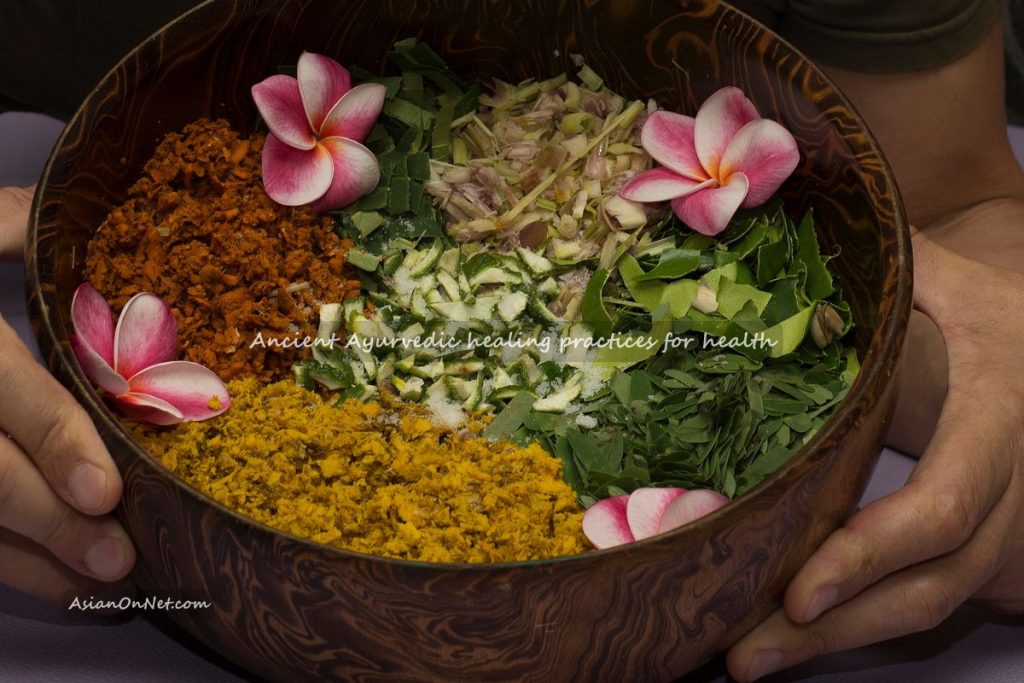
And today, modern science is beginning to validate what sages have known for centuries: ancient Ayurvedic healing practices for health are not only effective — they are essential.
In this deep dive, we’ll explore how Ayurveda fits within the broader tapestry of Asian healing, examine its most powerful techniques still used today, and show you how to integrate these time-tested practices into your modern life — safely and sustainably.
🧘 What Is Ayurveda? Origins and Core Principles
To understand why ancient Ayurvedic healing practices for health remain so effective, we must first understand their foundation.
The word Ayurveda comes from two Sanskrit roots: Ayur (life) and Veda (knowledge or science). Together, they mean “the science of life.” Unlike Western medicine, which often treats symptoms, Ayurveda seeks to identify and correct the root cause of imbalance before disease manifests.
Ayurveda’s earliest texts — the Charaka Samhita, Sushruta Samhita, and Ashtanga Hridayam — were composed between 1500 BCE and 500 CE. These texts laid out comprehensive systems of diagnosis, surgery, herbal medicine, diet, and daily routine — many of which are still taught in Ayurvedic colleges across India today.
At the heart of Ayurveda are three fundamental energies, or doshas:
- Vata – Air and Ether – governs movement, breath, and nervous system
- Pitta – Fire and Water – controls digestion, metabolism, and energy production
- Kapha – Earth and Water – manages structure, stability, and immunity
Each person is born with a unique combination of these doshas — their prakriti (constitution). Health is maintained when this balance is preserved; illness arises when it’s disrupted by poor diet, stress, toxins, or seasonal changes.

This personalized approach is what makes ancient Ayurvedic healing practices for health so powerful — they don’t offer one-size-fits-all solutions. Instead, they ask: What does your body truly need?
For example, a Vata-dominant person (typically thin, energetic, prone to anxiety) benefits from warm, grounding foods and routines. A Pitta type (intense, sharp, fiery) thrives on cooling foods and calm environments. Kapha types (strong, steady, slow-moving) need stimulation, movement, and lighter diets.
This level of individualization is why ancient Ayurvedic healing practices for health continue to resonate in our era of functional and integrative medicine.
🔥 Ancient Ayurvedic Healing Practices for Health
Let’s now explore some of the most impactful ancient Ayurvedic healing practices for health — time-tested methods that are still widely used across India and increasingly embraced worldwide.
👉 “ Looking to bring harmony into your daily life? Don’t miss our guide onMind Body Spirit Balance Practices in Asia.”
Panchakarma – The Fivefold Detoxification
Panchakarma (meaning “five actions”) is Ayurveda’s most intensive cleansing protocol. It’s designed to remove deep-seated toxins (ama) from the body and reset the digestive and immune systems.
The five primary therapies include:
- Vamana (therapeutic vomiting) – for excess Kapha
- Virechana (purgation) – for excess Pitta
- Basti (medicated enema) – for Vata imbalance
- Nasya (nasal administration of oils) – for head and sinus issues
- Raktamokshana (bloodletting) – rarely used today, replaced by modern detox support
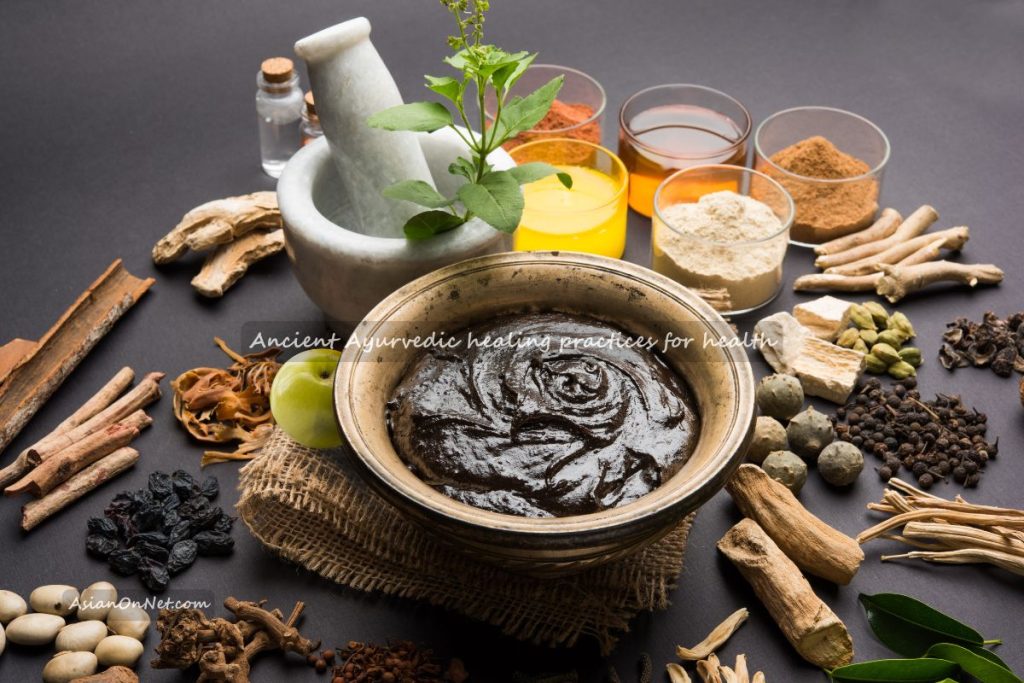
While full Panchakarma is typically done under supervision at Ayurvedic retreats, simplified versions — like oil massage, herbal teas, and dietary cleanses — can be adapted for home use.
These detox methods are among the most powerful ancient Ayurvedic healing practices for health, especially in our toxic modern environment.
Abhyanga – Daily Self-Massage with Oil
One of the simplest yet most transformative practices is Abhyanga — daily self-massage with warm, dosha-specific oils (like sesame for Vata, coconut for Pitta, mustard for Kapha).
Benefits include:
- Improved circulation
- Reduced muscle tension
- Enhanced sleep
- Softer skin
- Calmed nervous system
This ritual is not just about physical care — it’s an act of self-love and grounding. When practiced consistently, Abhyanga becomes a cornerstone of ancient Ayurvedic healing practices for health.
Dinacharya – The Daily Routine
Ayurveda emphasizes Dinacharya, or daily routine, as essential for maintaining balance. Waking up before sunrise, scraping the tongue, drinking warm water, practicing yoga — these are not random habits, but intentional rituals designed to align with natural rhythms.

For example, the Vata time of day (2–6 AM) is ideal for waking and meditation. Pitta time (10 AM–2 PM) is best for your largest meal. Kapha time (6–10 AM) requires movement to avoid sluggishness.
Living in harmony with these cycles is a hallmark of ancient Ayurvedic healing practices for health — and surprisingly easy to adopt.
🍵 Diet and Digestion: The Foundation of Balance
In Ayurveda, digestion (agni) is considered the single most important factor in health. A strong digestive fire transforms food into energy and vitality. A weak one creates toxins, fatigue, and disease.
That’s why ancient Ayurvedic healing practices for health place such strong emphasis on mindful eating and food compatibility.
Key Dietary Principles:
- Eat according to your dosha
Vata: warm, moist, grounding foods (oats, ghee, root vegetables)
Pitta: cooling, sweet, bitter (cucumber, coconut, leafy greens)
Kapha: light, warm, spicy (lentils, ginger, garlic) - Avoid incompatible food combinations
Milk with sour fruits, fish with dairy, or fruit after meals can weaken agni and create ama. - Eat in a calm environment
No phones, no TV — just presence. Digestion begins in the mind. - Favor six tastes at each meal
Sweet, sour, salty, pungent, bitter, astringent — all six promote balance.
These dietary habits reflect how ancient Ayurvedic healing practices for health prioritize prevention over cure. Instead of waiting for illness, they teach us to nourish ourselves daily.

Modern research supports this: studies show that Ayurvedic dietary interventions can improve digestion, reduce inflammation, and even support weight management (Source: Journal of Ayurveda and Integrative Medicine, 2020).
🌱 Herbal Remedies Still Used in Modern Wellness
One of the most visible legacies of Ayurveda is its herbal pharmacopeia. For millennia, Ayurvedic practitioners have used plant-based remedies to restore balance and treat disease.
Today, many of these herbs are backed by clinical research and sold globally as supplements.
Top 3 Ayurvedic Herbs Still Used Today:
Turmeric (Curcuma longa)
- Active compound: Curcumin
- Benefits: Anti-inflammatory, antioxidant, supports joint and brain health
- Modern use: Widely studied for arthritis, depression, and metabolic syndrome
Ashwagandha (Withania somnifera)
- Adaptogenic herb that helps the body manage stress
- Benefits: Reduces cortisol, improves sleep, boosts energy and focus
- Clinical trials show efficacy in anxiety and fatigue (NCBI, 2019)
Triphala
- A blend of three fruits: Amalaki, Bibhitaki, Haritaki
- Benefits: Gentle colon cleanser, supports digestion, rich in antioxidants
- Used for centuries as a daily tonic for longevity
These herbs exemplify the wisdom behind ancient Ayurvedic healing practices for health. They don’t just suppress symptoms — they support the body’s innate ability to heal.
And unlike many pharmaceuticals, they are generally safe when used appropriately, with minimal side effects.
🧘♀️ Daily Routines (Dinacharya) for Holistic Health
Ayurveda teaches that small, consistent actions create lasting change. The Dinacharya, or daily routine, is a perfect example.
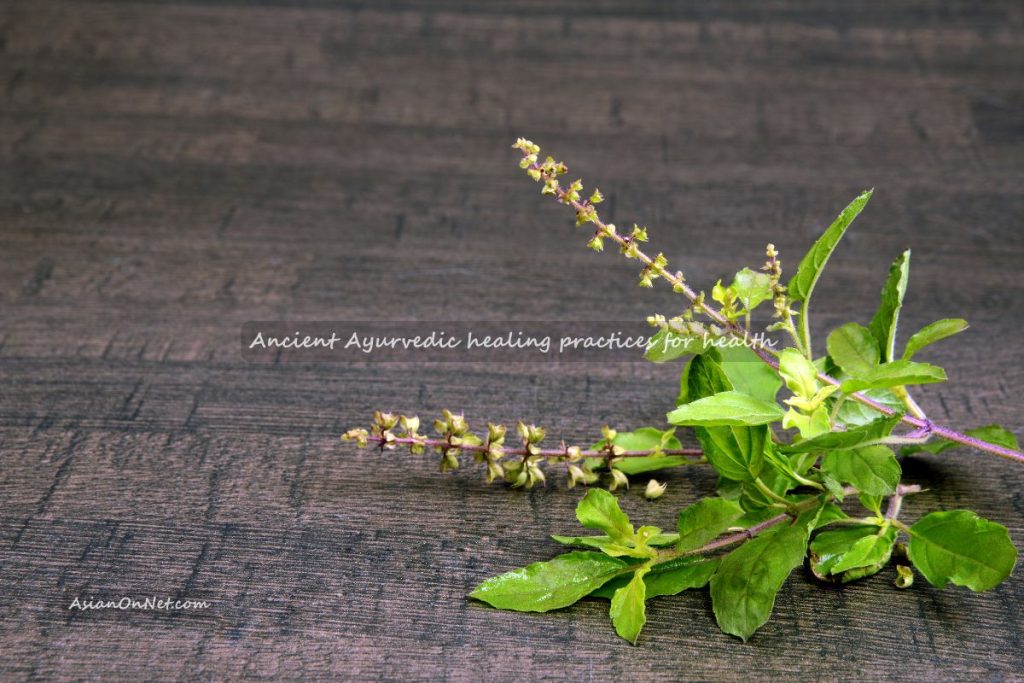
Here’s a simple morning routine rooted in ancient Ayurvedic healing practices for health:
- Wake before sunrise – Align with natural energy
- Scrape your tongue – Remove overnight toxins
- Drink warm water with lemon or ginger – Stimulate digestion
- Practice 5–10 minutes of meditation or breathwork – Calm the mind
- Do gentle yoga or stretching – Awaken the body
- Apply Abhyanga (oil massage) – Nourish skin and nerves
- Eat a balanced breakfast – Based on your dosha
These habits may seem minor, but together, they create a powerful foundation for vitality.
Ayurveda also emphasizes seasonal routines (Ritucharya), suggesting dietary and lifestyle shifts with the seasons. For example, lighter foods in summer (Pitta season), warming spices in winter (Vata season).
When followed, these routines embody the essence of ancient Ayurvedic healing practices for health — simple, preventive, and deeply effective.
🧠 Mind-Body Practices: Yoga, Meditation & Pranayama
While often taught separately in the West, yoga, meditation, and breath control (pranayama) are integral parts of Ayurveda.
In fact, classical Ayurvedic texts include detailed instructions on:
- Asanas (postures) for balancing doshas
- Meditation for calming the mind and reducing stress
- Pranayama (like Nadi Shodhana) for clearing energy channels
For example:
- Vata types benefit from slow, grounding practices (child’s pose, alternate nostril breathing)
- Pitta types thrive with cooling sequences (moon salutations, sheetali breath)
- Kapha types need energizing routines (sun salutations, kapalabhati)
These mind-body techniques are central to ancient Ayurvedic healing practices for health because they recognize that emotional and mental health are inseparable from physical wellness.
Modern neuroscience now confirms this: meditation reduces amygdala activity (the fear center), while pranayama improves heart rate variability and autonomic balance.
Ayurveda got there first — thousands of years ago.
🌏 Comparison with Other Asian Healing Systems
While Ayurveda is one of the oldest healing systems, it’s not the only one. Asia is home to several complementary traditions, each with unique strengths.
| System | Origin | Key Focus |
|---|---|---|
| Traditional Chinese Medicine (TCM) | China | Qi (energy), meridians, yin-yang balance |
| Kampo Medicine | Japan | Adapted from TCM; uses herbal formulas |
| Tibetan Medicine (Sowa Rigpa) | Himalayas | Balance of wind, bile, phlegm (similar to doshas) |
| Korean Sasang Medicine | Korea | Constitutional types based on temperament |
While these systems differ in language and technique, they share core principles:
- Prevention over treatment
- Holistic mind-body approach
- Use of herbs and diet
- Emphasis on natural rhythms
However, what sets ancient Ayurvedic healing practices for health apart is its deep psychological and spiritual dimension. Ayurveda doesn’t just treat the body — it addresses dharma (purpose), indriya (senses), and ojas (vital essence).
While TCM focuses on energy flow and Kampo on formula precision, Ayurveda offers a complete lifestyle science — making it uniquely suited for modern holistic wellness.
🔬 Scientific Validation: What Modern Research Says
Skepticism once surrounded Ayurveda, but today, research is catching up.
Recent studies have shown:
- Ashwagandha reduces stress and anxiety by up to 44% (Journal of Clinical Psychiatry, 2019)
- Turmeric has anti-inflammatory effects comparable to ibuprofen (without the side effects)
- Panchakarma leads to measurable reductions in oxidative stress and inflammation (NCBI, 2015)
- Ayurvedic diets improve metabolic markers in prediabetic patients (Diabetes Care, 2016)
Even major institutions are taking notice:
- The National Institutes of Health (NIH) funds Ayurvedic research
- Harvard Medical School offers integrative programs that include Ayurveda
- The WHO recognizes Ayurveda as a traditional medicine system
This growing body of evidence supports the efficacy of ancient Ayurvedic healing practices for health — not as mystical beliefs, but as practical, science-aligned tools.
Of course, caution is needed. Some Ayurvedic products have been found to contain heavy metals (due to improper preparation), so it’s essential to source from reputable, tested brands.
But when practiced correctly, these traditions offer profound benefits — with minimal risk.
🛠️ How to Integrate These Practices into Modern Life
You don’t need to move to an ashram to benefit from ancient Ayurvedic healing practices for health. Small, consistent changes can make a big difference.
Here’s how to start:
Discover Your Dosha
Take a free online quiz (from trusted sources like Banyan Botanicals or Chopra Center) to learn your constitution.
Adopt One Daily Ritual
Choose one practice:
- Tongue scraping
- Warm lemon water
- 5-minute meditation
- Evening oil massage
Upgrade Your Diet
Replace processed snacks with whole, seasonal foods. Try a weekly Ayurvedic meal — like kitchari (a cleansing rice-lentil dish).
Try an Ayurvedic Herb
Start with ashwagandha for stress or triphala for digestion. Always consult your doctor if on medication.
Listen to Your Body
Ayurveda teaches pratyahara — withdrawal of the senses. Turn off screens, eat slowly, rest when tired.
These steps may seem small, but they reflect the true spirit of Ayurveda: balance through awareness.
Start small: one ritual, one herb, one breath. That’s how ancient Ayurvedic healing practices for health become sustainable.
✅ Conclusion: Timeless Wisdom for Modern Times
The resurgence of interest in ancient Asian healing practices that still work today is no accident. In an age of burnout, chronic illness, and disconnection, we’re rediscovering what our ancestors knew: true health is holistic.
Among these traditions, Ayurveda stands as a beacon — a 5,000-year-old system that continues to offer practical, personalized, and profound solutions.
From diet and herbs to daily routines and mind-body practices, ancient Ayurvedic healing practices for health provide a roadmap for living in harmony with nature and ourselves.
They are not magic — they are medicine in the deepest sense: a way to restore balance, prevent disease, and live with purpose.
So whether you’re new to wellness or deep in your journey, consider this an invitation:
Explore Ayurveda. Try one practice. Listen to your body.
Because sometimes, the most revolutionary healing comes not from the future — but from the past.
✅ Frequently Asked Questions (FAQ)
Q: What are ancient Ayurvedic healing practices for health?
A: Ancient Ayurvedic healing practices for health are time-tested wellness techniques from India’s 5,000-year-old medical system. These include personalized diet plans, herbal remedies (like ashwagandha and turmeric), daily routines (Dinacharya), detoxification (Panchakarma), and mind-body practices such as yoga and meditation. Rooted in balancing the body’s three doshas (Vata, Pitta, Kapha), these practices promote long-term vitality rather than just symptom relief.
Q: Are Ayurvedic healing methods scientifically proven?
Yes, many Ayurvedic practices are now supported by modern research. Studies have shown that herbs like ashwagandha reduce stress and anxiety, turmeric has potent anti-inflammatory effects, and Ayurvedic dietary approaches can improve digestion and metabolic health. Institutions like the National Institutes of Health (NIH) and Harvard Medical School are actively researching Ayurveda’s role in integrative medicine.
Q: How is Ayurveda different from other Asian healing systems?
While systems like Traditional Chinese Medicine (TCM) and Kampo also emphasize balance and prevention, Ayurveda stands out for its deep focus on individual constitution (prakriti), daily lifestyle rituals, and the integration of physical, emotional, and spiritual health. It doesn’t just treat illness — it guides how to live well every day. This holistic, personalized approach is why ancient Ayurvedic healing practices for health remain so relevant.
Q: Can I practice Ayurveda without going to India or seeing a doctor?
Absolutely. You can start with simple, evidence-backed practices at home:
- Drink warm lemon water each morning
- Try self-massage with warm sesame or coconut oil (Abhyanga)
- Eat meals according to your body type (dosha)
- Use adaptogenic herbs like ashwagandha (after consulting your healthcare provider)
Many Ayurvedic principles are designed for everyday life — you don’t need a retreat to benefit.
Q: Are there any risks with Ayurvedic remedies?
Most Ayurvedic herbs and routines are safe when used correctly. However, some imported Ayurvedic supplements have been found to contain heavy metals like lead or mercury due to improper preparation. Always choose reputable, third-party tested brands and consult your doctor before starting new herbs — especially if you’re pregnant, nursing, or on medication.
Q: What is the most effective Ayurvedic practice for modern stress?
One of the most powerful tools is Abhyanga (daily self-massage with oil), combined with pranayama (breathwork) and ashwagandha supplementation. These practices calm the nervous system, reduce cortisol levels, and restore energy. Together, they form a core part of ancient Ayurvedic healing practices for health designed to combat chronic stress naturally.
Q: How do I know my Ayurvedic body type (dosha)?
You can identify your dominant dosha — Vata, Pitta, or Kapha — by taking a free dosha quiz from trusted sources like the Chopra Center, Banyan Botanicals, or the Ayurvedic Institute. These quizzes assess your physical traits, digestion, sleep patterns, and emotional tendencies. Knowing your dosha helps you personalize diet, exercise, and lifestyle choices for optimal balance.