






- Introduction: The Power and Diversity of Traditional Asian Parenting Values
- Core Pillars of Traditional Asian Parenting Values
- Regional Expressions of Traditional Asian Parenting Values
- Parenting Practices Rooted in Traditional Asian Parenting Values
- Modern Shifts and Hybrid Models with Traditional Asian Parenting Values
- The Enduring Power of Traditional Asian Parenting Values
- Conclusion: Honoring the Legacy of Traditional Asian Parenting Values
- FAQs: Quick Insights on Traditional Asian Parenting Values
Introduction: The Power and Diversity of Traditional Asian Parenting Values
Traditional Asian parenting values lie at the heart of how families across Asia nurture, guide, and shape future generations. From honoring elders to pursuing academic excellence, these values form a powerful cultural tapestry that spans continents and centuries.
Asia is home to a rich mosaic of cultures—ranging from the Confucian legacies of East Asia to the spiritual traditions of South and Southeast Asia. Yet, despite differences in language, religion, and history, certain parenting principles remain strikingly consistent across the region. Whether in a rural Indian village or a bustling Tokyo suburb, parenting tends to be rooted in similar ideals: respect for elders, discipline, family honor, and collective identity.
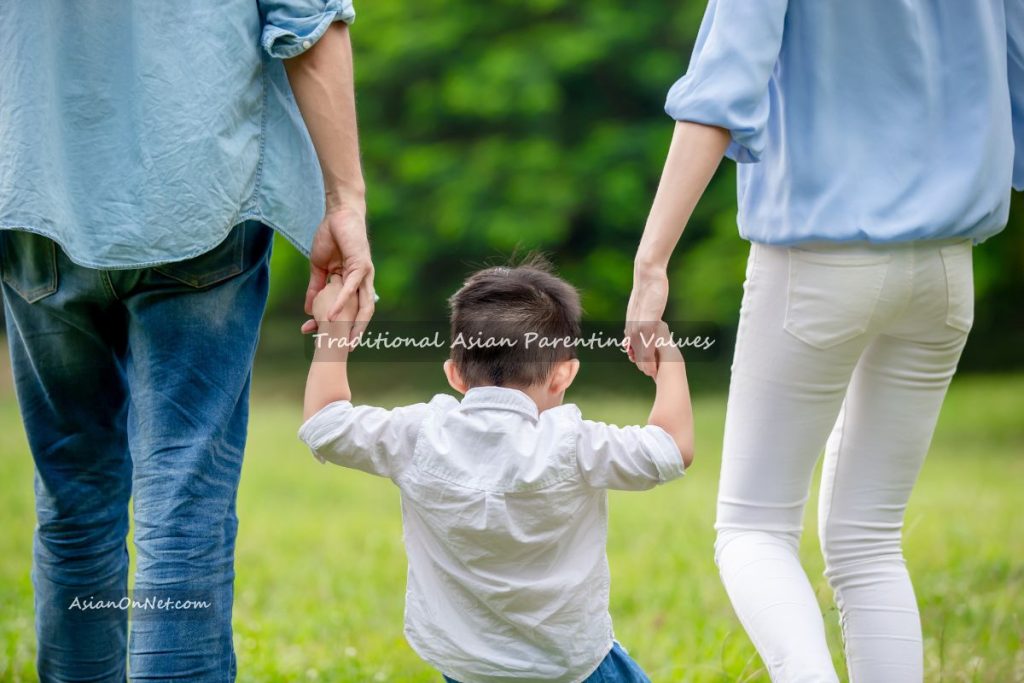
This article explores these shared yet nuanced traditions in depth. We’ll examine the core pillars that define traditional Asian parenting values, explore how these ideals manifest across regions, compare them to modern parenting styles, and consider their evolving role in the globalized world.
Understanding these values is not only key to appreciating Asian family life—it also offers timeless lessons on resilience, structure, and community for parents everywhere.
👉 “Parenting is only one part of a bigger picture. See how Asian family values and traditions shape society as a whole.*
Core Pillars of Traditional Asian Parenting Values
At the heart of traditional Asian parenting values lies a commitment to principles that prioritize family cohesion, discipline, and long-term success. While these values vary in expression, several foundational themes are found across much of Asia.
Filial Piety
In Confucian-influenced cultures like China, Korea, and Vietnam, filial piety (xiao) is considered a moral cornerstone. Children are expected to honor their parents and ancestors, often making life decisions with family interests in mind. This respect isn’t limited to obedience—it also extends to emotional support and lifelong care for aging parents.
Respect for Authority and Hierarchy
Asian parenting often reinforces a clear structure where elders, teachers, and authority figures are revered. This creates an environment where boundaries are well defined, and younger generations are taught to listen before they speak—a key marker of maturity.
Emphasis on Education and Self-Discipline
Academic success is a major emphasis in traditional Asian parenting values. Children are taught that hard work, sacrifice, and perseverance are not just pathways to success but also expressions of gratitude to the family. Education is viewed not only as a personal achievement but as a duty to one’s lineage and community.
These core values act as a moral compass, guiding parenting choices and shaping children’s understanding of responsibility, loyalty, and identity. For generations, traditional Asian parenting values have helped families navigate both adversity and success with a deep sense of purpose.
Regional Expressions of Traditional Asian Parenting Values
While traditional Asian parenting values share common threads, their expression varies across regions. These differences offer insight into how cultural context shapes family dynamics.
East Asia: China, Japan, and Korea
In East Asia, parenting is deeply influenced by Confucian ideals—particularly the emphasis on duty, harmony, and academic achievement.
- China: Parents often take an authoritative role, setting high expectations for academic and personal discipline. The phrase “Tiger Mom” emerged to describe this strict yet supportive parenting style rooted in deep care.
- Japan: Emotional restraint and group harmony (wa) are prioritized. Children are socialized to consider the needs of others before asserting their individuality.
- South Korea: A strong educational culture, driven by competition and parental involvement, reflects how traditional Asian parenting values emphasize sacrifice and social status.
Southeast Asia: Indonesia, Thailand, and the Philippines
Southeast Asian parenting often blends communal values with religious and spiritual traditions.
- Indonesia and Thailand: Respect for elders and religious observance are key. Children are taught from a young age to pray, give offerings, and participate in community life.
- Philippines: The concept of “utang na loob” (a debt of gratitude) reinforces family loyalty. Parenting involves nurturing children with warmth but also firm boundaries tied to Catholic teachings and indigenous beliefs.
Here, traditional Asian parenting values are infused with religious and communal identity, fostering strong emotional bonds.
👩👧 “Looking for fun activities with kids in the city? Don’t miss our guide on Top 20 Family-Friendly Attractions Around Bangkok.”
South Asia: India, Pakistan, and Sri Lanka
South Asian parenting emphasizes family honor, moral discipline, and obedience to elders.
- India: Parents often see their role as guardians of tradition. Respect for elders and academic success are central, alongside arranged guidance in personal decisions like marriage.
- Pakistan: Islamic principles heavily influence parenting, with obedience, modesty, and family honor forming the moral backbone.
- Sri Lanka: A mix of Buddhist, Hindu, and Christian values reinforces respect and duty, especially within multigenerational households.
In all regions, traditional Asian parenting values reflect a delicate balance between individual growth and family preservation, shaped by history, religion, and social norms.
Parenting Practices Rooted in Traditional Asian Parenting Values
Daily parenting practices across Asia are tangible reflections of traditional Asian parenting values—and they often diverge from Western ideals.
Authoritative vs. Authoritarian Parenting
Western observers may mistake strict Asian parenting for authoritarianism. However, many Asian parents are actually practicing a high-control, high-warmth model that blends structure with care. The child’s well-being is deeply intertwined with the family’s collective goals, not individual autonomy.
Discipline and Family Roles
Discipline is often administered through routines and expectations rather than punishment. Children are taught to anticipate needs, complete duties without prompting, and show deference to family elders.
Family roles are clearly defined, with mothers typically managing emotional education and fathers providing disciplinary oversight—though this is changing.
Intergenerational Households
In many Asian homes, three or even four generations live together. Grandparents are not only caretakers but moral instructors, reinforcing traditional Asian parenting values through storytelling, rituals, and guidance.

These practices reveal how tradition shapes the lived experience of childhood in Asian families—where love is often expressed through structure, sacrifice, and consistency.
Modern Shifts and Hybrid Models with Traditional Asian Parenting Values
Globalization, migration, and technological change are reshaping parenting worldwide. Yet many Asian families continue to integrate traditional Asian parenting values even as they adapt to modern challenges.
Hybrid Identities in Global Families
Asian parents raising children abroad often struggle to balance strict traditional expectations with the individualism of Western culture. Hybrid models have emerged, combining discipline with open communication, and academic focus with emotional validation.
Technology’s Role in Shaping Values
Digital tools have changed how parents monitor and guide children. However, many still use technology to reinforce core values—such as using educational apps or family messaging groups to maintain connections and expectations.
Cultural Preservation Among the Diaspora
Among second-generation immigrants, there’s a growing appreciation for traditional Asian parenting values. While these children may have pushed back in youth, they often return to these values as adults, recognizing their role in resilience and success.
These evolving models show that tradition is not static—it adapts, but its essence persists.
The Enduring Power of Traditional Asian Parenting Values
Despite globalization and cultural blending, traditional Asian parenting values remain a powerful influence in families throughout Asia and the diaspora. Their enduring nature lies in their ability to create a strong sense of identity, community, and moral grounding.
In a world where parenting trends come and go, these values offer stability. They teach children to respect others, honor commitments, and contribute meaningfully to family and society.
Even in households that adopt more open communication or relaxed rules, the roots of traditional Asian parenting values often remain. They shape the lens through which families interpret success, conflict, and love.
Ultimately, traditional Asian parenting values are not about strictness for its own sake—they’re about responsibility, reciprocity, and belonging. As new generations take on the role of parents, these values continue to evolve without losing their cultural essence.
Conclusion: Honoring the Legacy of Traditional Asian Parenting Values
Traditional Asian parenting values represent more than a set of family practices—they are a cultural legacy rooted in centuries of wisdom, discipline, and intergenerational care. Across Asia and its diasporas, these values continue to shape parenting in ways that foster resilience, community belonging, and moral responsibility.
In an age where parenting philosophies are increasingly shaped by individualism and fast-paced change, the grounding presence of these traditions offers something rare: continuity. While every generation may interpret these values differently, their essence—respect for elders, academic diligence, and family unity—remains relevant.
Importantly, these values are not without evolution. Many modern Asian parents now blend tradition with empathy, rules with emotional openness, and structure with encouragement. This hybrid approach is a testament to the adaptability of traditional Asian parenting values, not their rigidity.
Moreover, for many in the diaspora, reconnecting with these values becomes a meaningful way to preserve cultural identity and pass on ancestral wisdom to the next generation.
As global conversations about parenting continue to evolve, the enduring legacy of traditional Asian parenting values reminds us that love, in many cultures, is expressed through sacrifice, structure, and silent strength. Honoring these values means recognizing their power not only to guide children—but to bind families across generations.
FAQs: Quick Insights on Traditional Asian Parenting Values
What are common examples of traditional Asian parenting values in everyday life?
A: Examples include children standing when elders enter the room, prioritizing education over leisure, living with extended family, and making life choices (like career and marriage) based on parental guidance.
How do these values compare to Western parenting?
A: Western parenting often emphasizes independence and self-expression, while Asian parenting focuses more on interdependence, respect, and duty.
Are these values still relevant in modern society?
A: Absolutely. Many parents blend traditional values with modern flexibility, creating balanced approaches that honor heritage while adapting to new realities.
What are some examples of traditional Asian parenting values in everyday life?
A: These values show up in daily routines—children addressing elders respectfully, prioritizing academic work before play, and adhering to structured schedules. You’ll also see family meals as important bonding time, children helping with household chores without being asked, and decisions about college or careers involving the whole family.
Are traditional Asian parenting values the same across all Asian countries?
A: No, there are both shared values and regional variations. While respect for elders, family loyalty, and education are consistent, the ways these values are expressed differ. For example, Confucianism strongly influences East Asia, while South Asia blends religious duty with honor-based traditions.
How do these values impact children’s development?
A: Children raised with traditional Asian parenting values often grow up with a strong sense of discipline, responsibility, and respect for others. However, in overly strict environments, some may struggle with self-expression or emotional openness. Balance and context are key.
How do modern Asian parents integrate traditional and contemporary styles?
A: Many parents adopt a hybrid approach—maintaining structure, respect, and academic rigor while embracing open communication, emotional validation, and flexibility in career or lifestyle choices. This allows children to benefit from cultural grounding without feeling overly constrained.
What role do grandparents play in enforcing traditional Asian parenting values?
A: Grandparents often act as cultural custodians. They help transmit values through storytelling, rituals, discipline, and daily involvement—especially in multigenerational households. Their presence strengthens intergenerational bonds and reinforces moral teachings.
Are these values fading among younger generations?
A: While there is some shift toward individualism, many younger Asians—and diaspora communities—are reclaiming and redefining traditional Asian parenting values. They’re adapting them to modern life rather than abandoning them.