






- Introduction
- Decide How Long You Actually Have
- Do Not Treat Travel Days As Sightseeing Days
- Match The Number Of Destinations To The Length Of The Trip
- Choose Priority Destinations First
- Build A Realistic Itinerary
- Stay Longer In Major Destinations
- Include Buffer Time
- Avoid Planning Every Hour
- Create A Total Trip Budget
- Separate Fixed And Daily Costs
- Add A Budget Buffer
- Check Your Passport Early
- Research Entry Requirements Country By Country
- Do Not Assume A Friend's Experience Applies To You
- Check Transit Requirements Too
- Keep Important Travel Documents Organised
- Consider Travel Insurance Before Booking Everything
- Check Activity Exclusions
- Plan Around Climate And Season
- Do Not Rely Only On The Phrase Rainy Season
- Check Whether Your Destinations Have Different Climates
- Pack For The Trip You Are Actually Taking
- Pack Light Enough To Move Comfortably
- Bring Clothing Appropriate For Cultural Sites
- Think Carefully About Footwear
- Carry Essential Medicines Properly
- Plan Transport Between Destinations Before Booking Hotels
- Look At Door-To-Door Travel Time
- Decide Whether Overnight Travel Is Worth It
- Check Ferry And Island Connections Carefully
- Avoid Too Many Flights
- Choose Accommodation Based On Location, Not Just Price
- Read The Most Recent Reviews
- Check Arrival Logistics
- Avoid Changing Hotels Unnecessarily
- Prepare More Than One Payment Method
- Research Local Cash Use
- Check Card Fees Before Departure
- Avoid Carrying All Cash Together
- Plan Phone And Data Access
- Check Whether Your Phone Is Unlocked
- Download Important Information Offline
- Prepare For Local Apps
- Learn Basic Cultural Etiquette
- Learn A Few Local Words
- Research Religious And Cultural Sites Before Visiting
- Prepare For Differences Without Judging Them
- Think About Health Before Departure
- Research Health Advice Early
- Pack A Small Practical Health Kit
- Know How To Access Help
- Review Personal Safety
- Be Careful With Road Transport
- Share Your Itinerary When Appropriate
- Avoid Overpacking The Itinerary
- Remove One Destination If The Route Feels Tight
- Avoid One-Night Stops Unless They Have A Clear Purpose
- Consider Travel Fatigue
- Give Yourself Permission To Change The Plan
- Create A Pre-Trip Checklist
- Common Asia Trip Planning Mistakes
- Visiting Too Many Countries
- Ignoring Transfer Days
- Booking Flights Before Checking Entry Requirements
- Assuming One Climate Fits All Of Asia
- Packing Too Much
- Choosing Hotels Only By Price
- Relying On One Bank Card
- Ignoring Phone Setup
- Researching Culture Only After Arrival
- Leaving Health Preparation Too Late
- Scheduling Every Day
- A Simple Planning Order
- Conclusion
- FAQ
- What Should I Do First When Planning A Trip To Asia?
- How Many Countries Should I Visit On One Asia Trip?
- How Far In Advance Should I Check Passport And Entry Requirements?
- Do I Need Travel Insurance For Asia?
- How Should I Plan For Weather In Asia?
- How Much Should I Pack For A Multi-Country Asia Trip?
- Should I Book All Transport Before Arriving?
- What Is The Best Way To Prepare Money For Asia?
- Should I Buy A SIM Or eSIM Before Travelling?
- What Is The Biggest Mistake When Planning A Trip To Asia?
Introduction
Asia is enormous, varied, and easy to underestimate when planning a journey.
A traveller may look at a map and think several countries appear close together, only to discover that moving between them can require flights, long train journeys, border formalities, airport transfers, and full travel days.
That is why planning a trip to Asia should begin with preparation rather than with a long list of places you hope to see.
Before booking flights and hotels, decide how much time you really have, how quickly you want to move, what your budget can support, and which destinations matter most.
Then research practical issues such as:
- Passport validity
- Entry requirements
- Travel insurance
- Climate
- Transport
- Accommodation
- Payments
- Mobile data
- Health preparation
- Local customs
Good planning a trip to Asia is less about fitting the maximum number of countries into one journey and more about creating a trip that is realistic, affordable, comfortable, and flexible enough to enjoy.
👉 “Travelers planning a wider trip across Asia may also find this practical introduction to visiting Bangkok useful for understanding the city, local experiences, and everyday travel basics.”
Decide How Long You Actually Have
The first question is simple:
How many usable travel days do you really have?
Do not count only the dates between departure and return.
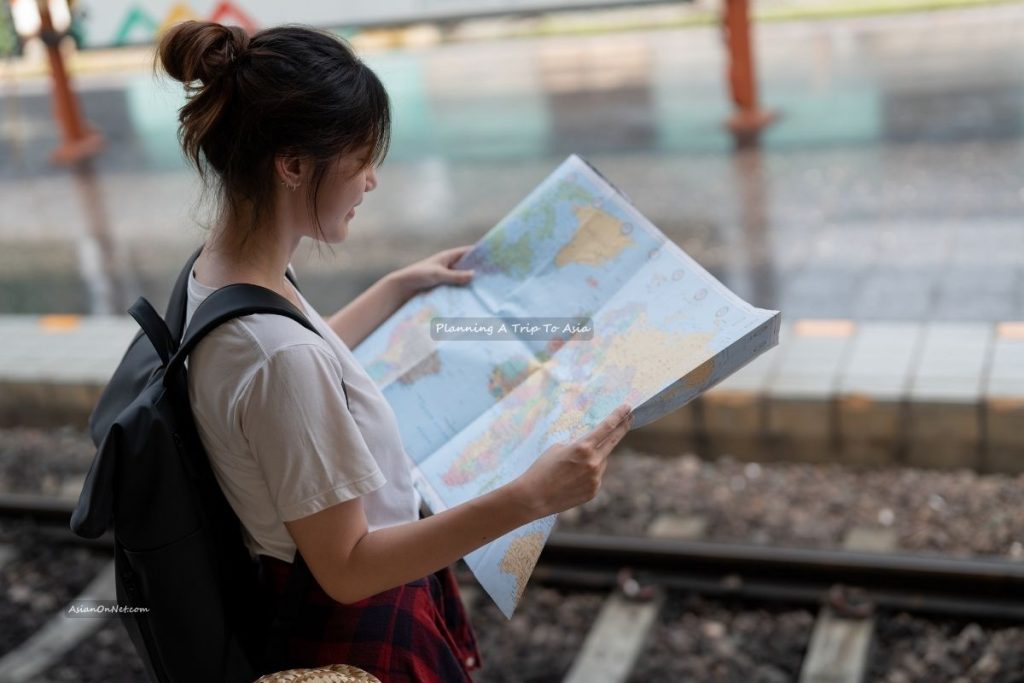
Consider:
- International travel time
- Jet lag
- Arrival day
- Departure day
- Transfers between destinations
- Rest days
A fourteen-day holiday does not necessarily provide fourteen full sightseeing days.
When planning a trip to Asia, start with the actual amount of usable time.
Do Not Treat Travel Days As Sightseeing Days
Moving from one destination to another often takes longer than expected.
A short flight may still involve:
- Travelling to the airport
- Check-in
- Security
- Waiting
- Flight time
- Immigration
- Baggage collection
- Transport to the hotel
A one-hour flight can therefore consume much of a day.
The same applies to trains, ferries, buses, and land-border crossings.
Build those days into the itinerary from the beginning.
Match The Number Of Destinations To The Length Of The Trip
One of the most common mistakes when planning a trip to Asia is trying to visit too many places.
For example, a short holiday may become exhausting if it includes:
- Three countries
- Five cities
- Several flights
- Multiple hotel changes
Every move requires packing, checking out, travelling, finding the next accommodation, and settling in again.
Fewer destinations often create a better trip.
Choose Priority Destinations First
Make three lists:

Must visit
Places you would genuinely regret missing.
Would like to visit
Good additions if time allows.
Optional
Places that can be removed without damaging the trip.
Build the itinerary around the first list.
This prevents planning a trip to Asia from becoming a competition to include every famous destination.
Build A Realistic Itinerary
Once you know how much time you have, map the trip logically.
Look at:
- Geography
- Transport connections
- Travel time
- Airport access
- Border crossings
A route that looks efficient on a map may not actually have convenient transport connections.
Avoid travelling back and forth unnecessarily.
Stay Longer In Major Destinations
Large cities and major regions often need several days.
Trying to visit a city for one night may mean:
Day one: Arrive.
Day two: Check out.
There is very little time between those events.
When planning a trip to Asia, allow enough time to experience a destination without constantly preparing for the next one.
Include Buffer Time
Not every day should be tightly scheduled.
Leave room for:
- Delays
- Bad weather
- Tiredness
- Laundry
- Unexpected discoveries
- Simply slowing down
Buffer time can be particularly useful before an important international flight.
A flexible itinerary is usually easier to manage than one where every hour depends on the previous connection running perfectly.
Avoid Planning Every Hour
A useful itinerary identifies priorities without controlling the entire day.
You might plan:
Morning: Major attraction.
Afternoon: Flexible.
Evening: Dinner area or local activity.
This provides direction without making the trip feel like work.
Good planning a trip to Asia leaves room for spontaneous experiences.
Create A Total Trip Budget
Before booking, estimate the entire cost.
Include:
- International flights
- Regional flights
- Trains
- Buses
- Ferries
- Accommodation
- Food
- Local transport
- Attractions
- Insurance
- Mobile data
- Laundry
- Shopping
- Emergency reserve
A cheap hotel does not automatically mean the whole destination will be cheap.
Look at the total daily cost.
Separate Fixed And Daily Costs
It can help to divide the budget into two categories.
Fixed Costs
These may include:
- International flights
- Insurance
- Major transport
- Prepaid hotels
Daily Costs
These may include:
- Meals
- Local transport
- Entrance fees
- Drinks
- Small purchases
This makes planning a trip to Asia easier because you can see which expenses are already committed and which can still be adjusted.
Add A Budget Buffer
Unexpected costs happen.
You may need:
- A taxi instead of public transport
- An extra hotel night
- A replacement charger
- Medical care
- A last-minute ticket
Avoid planning a budget that requires every day to go perfectly.
A reasonable reserve can reduce stress.
Check Your Passport Early
Do not wait until shortly before departure to look at your passport.
Check:
- Expiry date
- Condition
- Available pages where relevant
- Whether the name matches your bookings
Different destinations may have different passport-validity requirements.
When planning a trip to Asia, check the current official requirements for every country you intend to enter.
Research Entry Requirements Country By Country
Asia does not have one shared entry system.
Each country can have different rules.
Depending on your nationality and destination, requirements may involve:
- Visa-free entry
- Visa on arrival
- Electronic authorisation
- Electronic visa
- Advance visa application
- Proof of onward travel
- Accommodation information
- Other documentation
Rules can change.
Always verify current requirements through official government, embassy, or immigration sources before travel.
Do Not Assume A Friend’s Experience Applies To You
Entry requirements often depend on nationality.
A friend may say:
“I didn’t need a visa.”
That does not mean you have the same requirement.
When planning a trip to Asia, search based on:
Your passport nationality + your destination.
Do the same for every country on a multi-country itinerary.
Check Transit Requirements Too
Travellers sometimes focus only on their final destination.
But a transit country may also have rules that affect the journey.
Check whether:
- You remain airside
- You need to collect baggage
- You change airports
- You pass immigration
A self-transfer between separate tickets may involve different practical requirements from a normal connecting flight.
Keep Important Travel Documents Organised
Store important information in more than one place.
Useful documents may include:
- Passport copy
- Insurance information
- Flight bookings
- Hotel confirmations
- Entry approvals
- Emergency contacts
Keep digital copies accessible securely.
It can also be useful to keep essential booking information available offline.
Consider Travel Insurance Before Booking Everything
Travel insurance should be considered early in planning a trip to Asia, not only after every booking has been made.
Policies can differ significantly.
Review what the policy covers and excludes.
Possible areas to consider include:
- Emergency medical care
- Trip cancellation
- Trip interruption
- Delays
- Lost baggage
- Activities
Read the policy rather than relying only on a marketing summary.
Check Activity Exclusions
If the trip includes activities such as:
- Motorcycling
- Scuba diving
- Trekking
- High-altitude travel
- Adventure sports
check whether the insurance covers them.
Some policies may have conditions relating to licences, protective equipment, altitude, or specific activities.
Do not assume all holiday activities are automatically included.
Plan Around Climate And Season
Asia includes tropical islands, deserts, mountains, cold northern regions, humid megacities, and places with strong monsoon patterns.
There is no single “Asian climate.”
When planning a trip to Asia, research weather by specific destination and month.
Look at:
- Temperature
- Rainfall
- Humidity
- Monsoon patterns
- Typhoon or cyclone seasons where relevant
- Mountain temperatures
- Air-quality patterns where relevant
Seasonal conditions can affect both comfort and transport.
Do Not Rely Only On The Phrase Rainy Season
Rainy season does not necessarily mean it rains all day every day.
But it can still influence:
- Boat services
- Road conditions
- Outdoor activities
- Hiking
- Beach conditions
Research the actual destination rather than assuming all tropical regions behave the same way.
Check Whether Your Destinations Have Different Climates
A multi-country journey may require clothing for very different conditions.
You might travel from:
- Hot tropical weather
to
- Cool mountains
to
- Air-conditioned cities
This can make packing more complicated.
Climate research is therefore an important part of planning a trip to Asia.
Pack For The Trip You Are Actually Taking
Do not pack for every possible situation.
Start with:
- Climate
- Activities
- Length of trip
- Laundry access
- Cultural settings
Then choose clothing accordingly.
If laundry is easy to arrange, you may need fewer clothes than expected.
Pack Light Enough To Move Comfortably
An overpacked suitcase becomes more annoying when the itinerary includes:
- Trains
- Ferries
- Stairs
- Small taxis
- Frequent hotel changes
A lighter bag makes multi-destination travel easier.
When planning a trip to Asia, think about how often you will physically move your luggage.
Bring Clothing Appropriate For Cultural Sites
Some religious and cultural sites may expect more modest clothing.
Requirements vary by country and location.
A lightweight option that covers shoulders or legs when necessary can be useful.
Research specific sites if they are important parts of the itinerary.
Think Carefully About Footwear
Choose footwear based on actual activities.
You may need:
- Comfortable walking shoes
- Sandals
- Hiking footwear
Avoid bringing several bulky pairs without a clear reason.
In some destinations, shoes may be removed frequently when entering homes or certain buildings, so practical footwear can make daily travel easier.
Carry Essential Medicines Properly
Bring enough regular medication for the trip, with an appropriate extra supply when practical.
Keep important medicines accessible rather than placing everything in checked baggage.
Because rules concerning medicines can differ between countries, travellers using prescription or controlled medicines should research destination-specific requirements before departure.
Plan Transport Between Destinations Before Booking Hotels
Before confirming the entire route, ask:
How will I get from each place to the next?
Options may include:
- Flights
- High-speed rail
- Overnight trains
- Buses
- Ferries
- Private transfers
Compare travel time, convenience, and total cost.
This is one of the most important stages of planning a trip to Asia.
Look At Door-To-Door Travel Time
Do not compare only:
One-hour flight
with
Five-hour train
The train may leave from the city centre and arrive centrally.
The flight may require long airport transfers and waiting time.
Compare the complete journey.
Decide Whether Overnight Travel Is Worth It
Overnight trains and buses can sometimes save the cost of a hotel.
But ask whether you actually sleep well while travelling.
Arriving exhausted can reduce the value of the following day.
Use overnight transport because it makes sense, not simply because it looks efficient on paper.
Check Ferry And Island Connections Carefully
Island travel may involve:
- Seasonal schedules
- Weather dependence
- Multiple transfers
- Limited departure times
Avoid scheduling a tight ferry connection immediately before an important international flight.
Extra buffer time can protect the itinerary.
Avoid Too Many Flights
Low-cost regional flights can make distant destinations accessible, but flying every few days can become tiring.
Each flight adds:
- Packing
- Airport transfers
- Security
- Waiting
- Potential delays
When planning a trip to Asia, consider whether another destination is really worth another airport day.
Choose Accommodation Based On Location, Not Just Price
A cheaper hotel far from everything may cost more in:
- Taxis
- Travel time
- Energy
Study the location before booking.
Consider proximity to:
- Public transport
- Attractions
- Restaurants
- Transport hubs
- Areas you plan to visit
A slightly more expensive but well-located hotel can sometimes provide better overall value.
Read The Most Recent Reviews
Accommodation quality can change.
Recent reviews can reveal current issues involving:
- Noise
- Construction
- Cleanliness
- Access
- Wi-Fi
- Surroundings
Look for repeated patterns rather than treating one unusually positive or negative review as definitive.
Check Arrival Logistics
Ask:
- What time do I arrive?
- Is reception open?
- Can I reach the hotel easily at night?
- Is airport transport available?
- Is public transport still operating?
Late-night arrivals deserve extra planning.
Avoid Changing Hotels Unnecessarily
Even within one city, changing accommodation can consume substantial time.
Unless there is a strong reason, staying in one suitable location can make the trip simpler.
Frequent hotel moves can make planning a trip to Asia feel much more complicated than necessary.
Prepare More Than One Payment Method
Do not depend entirely on one card.
A practical setup may include:
- Primary payment card
- Backup card
- Some cash
Keep backup payment methods separately where practical.
Cards are widely accepted in some destinations but much less useful in others.
Research Local Cash Use
Some destinations remain heavily cash-based for:
- Markets
- Small restaurants
- Local transport
- Small shops
Others have extensive digital-payment systems.
Research what foreign visitors can realistically use.
Do not assume every local mobile-payment system will be available to tourists.
Check Card Fees Before Departure
Your bank may charge:
- Foreign transaction fees
- ATM fees
- Currency-conversion fees
Learn these costs before the trip.
It may influence which card you use and how frequently you withdraw cash.
Avoid Carrying All Cash Together
Divide emergency funds where practical.
For example:
- Some in wallet
- Some securely stored elsewhere
The same principle applies to cards.
Losing one wallet should not ideally remove every way you have to access money.
Plan Phone And Data Access
Mobile internet can make travel much easier.
It supports:
- Maps
- Transport apps
- Translation
- Hotel communication
- Bookings
- Banking
- Emergency information
Before departure, compare:
- Roaming
- Local SIM
- eSIM options
The best choice depends on destination, phone compatibility, and trip length.
Check Whether Your Phone Is Unlocked
A local SIM will not be useful if the phone cannot accept another network.
Check before departure.
For eSIMs, make sure the device supports the required technology.
This is a simple part of planning a trip to Asia that is easy to overlook.
Download Important Information Offline
Do not assume you will always have internet access.
Download useful items such as:
- Maps
- Hotel address
- Transport tickets
- Translation resources
- Key booking confirmations
Offline access can be particularly useful immediately after arrival.
Prepare For Local Apps
Some countries rely heavily on particular transport, messaging, map, or payment apps.
Research which apps are genuinely useful for travellers before departure.
Set up accounts early where possible.
Some apps may require:
- Phone verification
- Payment setup
- Identity checks
Doing this in advance can make arrival easier.
Learn Basic Cultural Etiquette
Asia contains many different cultures.
Avoid broad assumptions such as:
“People in Asia do this.”
Instead, research each destination separately.
Useful topics may include:
- Greetings
- Dress
- Religious etiquette
- Tipping
- Shoes
- Dining
- Public behaviour
- Photography
Cultural preparation is an important part of planning a trip to Asia because respectful behaviour often depends on local context.
Learn A Few Local Words
You do not need fluency.
Simple phrases such as:
- Hello
- Thank you
- Please
- Excuse me
can be useful and appreciated.
Learn pronunciation from a reliable language source rather than guessing from English spelling.
Research Religious And Cultural Sites Before Visiting
Temples, mosques, shrines, monasteries, and other sacred sites may have specific expectations.
Before visiting, check:
- Clothing
- Photography
- Shoes
- Restricted areas
- Behaviour
Respectful preparation avoids unnecessary misunderstandings.
Prepare For Differences Without Judging Them
Travel inevitably involves unfamiliar:
- Food
- Transport
- Toilets
- Communication styles
- Opening hours
- Service expectations
Approach differences with curiosity.
The goal of planning a trip to Asia is not to eliminate every surprise.
It is to prepare enough that ordinary differences do not become unnecessary stress.
Think About Health Before Departure
Health preparation should happen before the trip, particularly for long journeys, remote destinations, or travellers with existing medical needs.
Depending on destination and personal circumstances, preparation may involve:
- Routine medical care
- Vaccination advice
- Prescription medicines
- Travel-health consultation
- Mosquito precautions
- Food and water considerations
Because recommendations depend on destination, season, activities, health history, and current guidance, travellers should obtain appropriate professional advice rather than relying on a generic Asia-wide checklist.
Research Health Advice Early
Some travel-health preparation may need to happen weeks before departure.
Do not leave everything until the night before flying.
When planning a trip to Asia, review destination-specific health information early enough to act on it.
Pack A Small Practical Health Kit
Depending on the trip, a simple kit might contain personal essentials such as:
- Regular medicines
- Basic first-aid items
- Sunscreen
- Insect repellent
- Other items appropriate to the destination
Avoid carrying an enormous pharmacy without a clear reason.
Research any restrictions that may apply to medicines you plan to bring across borders.
Know How To Access Help
Before travelling, know:
- Insurance contact information
- Local emergency information
- Where important documents are stored
For remote areas, consider how far you will be from medical facilities.
This is particularly important when the itinerary includes adventurous or isolated destinations.
Review Personal Safety
Safety preparation should be specific to each destination.
Research:
- Common tourist scams
- Transport risks
- Local laws
- Areas requiring additional caution
- Emergency procedures
Use current official travel advice when making decisions.
Avoid assuming an entire country is either completely safe or completely dangerous.
Be Careful With Road Transport
Road conditions, driving behaviour, and enforcement can vary significantly.
If considering renting a car or motorcycle, research:
- Licence requirements
- Insurance
- Road rules
- Helmet requirements
- Local driving conditions
Do not rent a motorcycle simply because it is common among other tourists.
Share Your Itinerary When Appropriate
For solo travellers or remote trips, it can be useful for someone you trust to know:
- Where you are staying
- Major transport details
- General route
You do not need to report every movement.
The goal is simply to make important travel information accessible if something goes wrong.
Avoid Overpacking The Itinerary
This may be the most important lesson in planning a trip to Asia.
Travellers often think:
“If I’m flying that far, I should see as much as possible.”
That logic can lead to a trip consisting mainly of:
- Airports
- Train stations
- Hotel check-ins
- Packing
- Unpacking
Seeing more places does not automatically create a better trip.
Remove One Destination If The Route Feels Tight
After building the itinerary, look at it again.
Then ask:
What happens if I remove one stop?
You may discover that the trip suddenly becomes much more comfortable.
Extra time can be used for:
- Exploring neighbourhoods
- Resting
- Trying local food
- Returning to a favourite place
- Handling delays
A slower itinerary often gives more room for real experiences.
Avoid One-Night Stops Unless They Have A Clear Purpose
One-night stays may make sense for:
- Transit
- Airport positioning
- Specific short visits
But repeated one-night stops create constant logistical work.
Two or three nights in fewer destinations may provide a better rhythm.
Consider Travel Fatigue
Travel fatigue is real.
It can come from:
- Early departures
- Heat
- Long walks
- Language differences
- Poor sleep
- Constant decisions
- Repeated packing
Build recovery time into planning a trip to Asia, especially during longer journeys.
Give Yourself Permission To Change The Plan
Not every pre-booked idea needs to happen.
If you are exhausted, skip something.
If you love one destination, stay longer if your bookings allow it.
A good plan provides structure without becoming a prison.
Create A Pre-Trip Checklist
Before departure, review:
Trip length: Is the route realistic for the number of days?
Itinerary: Are there too many destinations?
Budget: Have transport, accommodation, food, activities, and emergency funds been included?
Passport: Is it valid for the relevant requirements?
Entry rules: Have current requirements been checked for every destination?
Insurance: Does the policy suit the actual trip and activities?
Climate: Have you checked weather and seasonal conditions?
Packing: Are you carrying only what you realistically need?
Transport: Do you know how you will move between destinations?
Accommodation: Are locations practical?
Money: Do you have more than one payment method?
Data: Will your phone work, and how will you connect?
Culture: Have you reviewed basic etiquette?
Health: Have destination-specific needs been considered?
Safety: Have you checked current local information?
Buffer: Is there enough flexibility for delays and rest?
A checklist keeps planning a trip to Asia focused on practical preparation.
Common Asia Trip Planning Mistakes
Visiting Too Many Countries
More border crossings mean more travel time.
Ignoring Transfer Days
Transport can consume entire days.
Booking Flights Before Checking Entry Requirements
Research passport and entry rules first.
Assuming One Climate Fits All Of Asia
Weather varies greatly by destination.
Packing Too Much
Frequent travel becomes harder with excessive luggage.
Choosing Hotels Only By Price
Location can matter as much as nightly cost.
Relying On One Bank Card
Carry a backup payment method.
Ignoring Phone Setup
Mobile data is extremely useful for independent travel.
Researching Culture Only After Arrival
Basic preparation can prevent avoidable mistakes.
Leaving Health Preparation Too Late
Some travel-health decisions need advance planning.
Scheduling Every Day
Leave enough room for delays, rest, and spontaneous activities.
Avoiding these mistakes can make planning a trip to Asia much smoother.
A Simple Planning Order
If the number of tasks feels overwhelming, work through them in this order:
Decide
Choose trip length, priorities, and approximate budget.
Research
Check entry requirements, climate, health considerations, and transport.
Build
Create a realistic route.
Book
Reserve major flights, transport, and accommodation when appropriate.
Prepare
Arrange insurance, payments, mobile data, and important documents.
Pack
Choose items based on climate, culture, and activities.
Review
Look at the itinerary one final time and remove unnecessary complexity.
This sequence keeps planning a trip to Asia manageable.
👉 “Travelers preparing for their first trip across Asia may also explore these beginner-friendly destination ideas for first-time visitors for more inspiration when choosing where to go.”
Conclusion
Good planning a trip to Asia begins long before departure.
Start by deciding how much time you actually have.
Then choose a realistic number of destinations.
Do not build an itinerary that requires constant flights, trains, hotel changes, and border crossings simply because many places look close on a map.
Budget for the whole journey rather than only flights and hotels. Include local transport, food, activities, insurance, mobile data, and a reserve for unexpected expenses.
Passport and entry research should happen early.
Every destination can have different requirements, and those requirements may depend on nationality. Always verify current information through the appropriate official sources before travel.
Climate also matters.
Asia does not have one weather pattern. Research each destination individually and pack according to the actual season, activities, and cultural settings.
Transport between destinations deserves careful attention. Compare door-to-door travel time, not just the number printed beside a flight or train.
Accommodation should be evaluated by location as well as price.
A well-located hotel can reduce transport costs and save valuable time.
Money preparation should include more than one payment method. Phone preparation should include a realistic plan for roaming, SIM, or eSIM access, plus essential information downloaded for offline use.
Cultural preparation can be simple but valuable. Learn basic etiquette for each destination and avoid treating Asia as one single culture.
Health and safety preparation should also be destination-specific. Check current professional and official guidance where appropriate, especially for longer trips, remote areas, medical needs, or activities carrying additional risk.
Most importantly, avoid overpacking the itinerary.
One of the easiest ways to improve planning a trip to Asia is to remove a destination rather than add one.
More time in fewer places can mean less time in airports, fewer hotel changes, lower transport stress, and more opportunity to understand the places you came to see.
A strong travel plan does not eliminate spontaneity.
It handles the important practical details before departure so that once the trip begins, you have more time and energy to enjoy it.
FAQ
What Should I Do First When Planning A Trip To Asia?
Begin by deciding how long you can travel, which destinations matter most, and what budget you can realistically afford. Then research entry requirements, climate, and transport before finalising the route.
How Many Countries Should I Visit On One Asia Trip?
There is no fixed number. It depends on trip length and transport time. In general, planning a trip to Asia is easier when you prioritise fewer destinations rather than trying to cross several countries quickly.
How Far In Advance Should I Check Passport And Entry Requirements?
Check early in the planning process and verify again before departure, because requirements can change. Use official government, immigration, or embassy information for each destination.
Do I Need Travel Insurance For Asia?
Travel insurance is worth considering for medical emergencies, cancellation, interruption, delays, baggage, and other covered events. Read the policy carefully and check whether planned activities are included.
How Should I Plan For Weather In Asia?
Research each destination by month. Temperature, rainfall, monsoon patterns, mountain weather, and severe-weather seasons can differ greatly across the region.
How Much Should I Pack For A Multi-Country Asia Trip?
Pack according to climate, activities, laundry access, and cultural requirements. A lighter bag is usually easier if you will frequently use trains, ferries, flights, and local transport.
Should I Book All Transport Before Arriving?
Major flights or limited-capacity routes may be worth arranging in advance, while some local transport can remain flexible. The right balance depends on destination, season, and how fixed you want the itinerary to be.
What Is The Best Way To Prepare Money For Asia?
Carry more than one payment method, research local card and cash use, check your bank’s foreign fees, and keep backup funds separately.
Should I Buy A SIM Or eSIM Before Travelling?
It depends on the countries, phone, and trip length. Compare roaming, local SIMs, and eSIMs before departure, and confirm that your phone is compatible and unlocked where necessary.
What Is The Biggest Mistake When Planning A Trip To Asia?
One of the biggest mistakes is creating an overpacked itinerary. Successful planning a trip to Asia usually means allowing enough time for transport, rest, delays, and actual experiences instead of trying to visit the maximum number of destinations.